
Struggling with packaging is more common than you think.
- 90% of arthritis patients and 68% of general consumers face challenges with packaging.
- 54% of arthritis patients won’t repurchase hard-to-open products.
- 67% of arthritis patients and 54% of general consumers would switch brands for easier packaging.
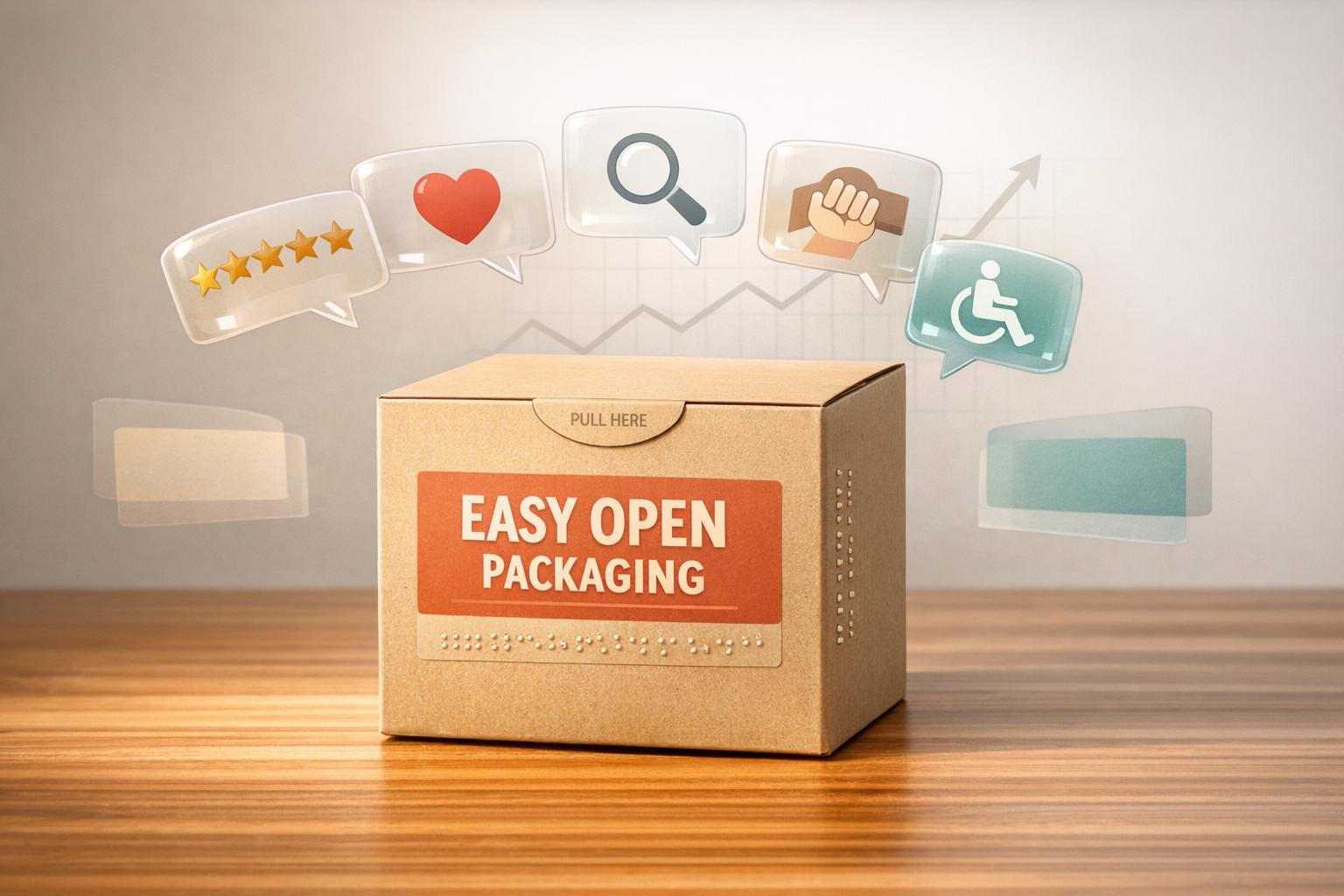
Accessible packaging solves these problems with features like tear notches, ergonomic pull tabs, bold fonts, and tactile markings. Brands like Unilever, Kellogg’s, and Rare Beauty are leading the way with designs that reduce physical effort and improve readability.
This isn’t just about convenience - it’s a smart business move. With arthritis patients controlling $13.1 trillion in global spending power and over 1 billion people worldwide living with disabilities, usability-focused packaging can drive loyalty and sales.
Let’s explore how accessible packaging compares to traditional designs and why it’s critical for both consumers and businesses.
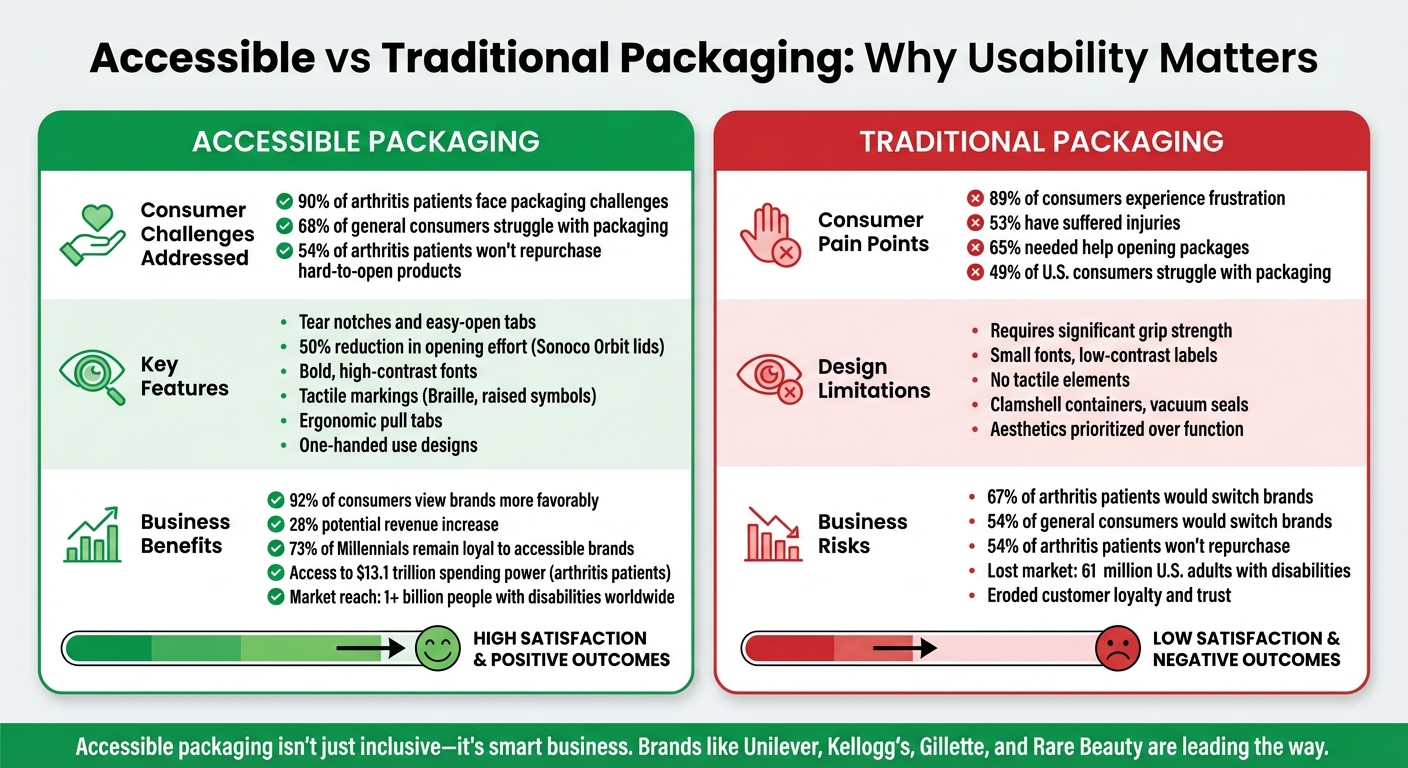
Accessible vs Traditional Packaging: Consumer Impact and Business Benefits Comparison
1. Accessible Packaging
Accessible packaging is about making products easy to use for everyone - regardless of physical ability, age, or dexterity. The goal isn't to complicate things but to remove barriers.
Physical Effort
One of the biggest challenges with traditional packaging is the force required to open it. Many designs demand significant grip strength or even tools to access the product. Accessible packaging flips this idea by focusing on ease of use. For example, ISO 17480:2015 provides guidelines to minimize opening force and create user-friendly mechanisms.
Take Gillette, for instance. In 2021, they replaced plastic blister packs for their premium razors and blade cartridges with cardboard packaging that includes a tear strip and minimal glue - making it easy to open without tools. Similarly, Unilever introduced Degree Inclusive, a deodorant container designed for one-handed use, featuring enhanced grip placement and magnetic closures for effortless cap removal. Sonoco's Orbit metal jar lids also improve usability, offering a 50% reduction in the effort needed to open them compared to traditional lids.
These innovations are particularly important for the 15% of the global population living with disabilities. Features like wide caps, textured surfaces, and squeezable materials allow individuals with conditions like arthritis or limited dexterity to use products independently.
Label Readability
Ease of use extends beyond physical design - packaging must also be visually accessible. Bold, sans-serif fonts and high-contrast color schemes (like black text on white backgrounds) help ensure legibility.
In 2022, Kellogg's introduced NaviLens technology on cereal packaging in Europe. This system uses high-contrast colored square codes that smartphones can detect from up to three meters away. The app reads aloud details like ingredients, allergens, and recycling instructions. Herbal Essences also added tactile markings to its organic range bottles - one row of raised lines for shampoo and two rows of dots for conditioner - helping users identify products by touch.
Unilever partnered with the Royal National Institute of Blind People (RNIB) to add accessibility-enabled QR codes to Persil laundry packs. These codes can be scanned from over a meter away, providing audio instructions and enlarged text for users who struggle with small print. This approach addresses the common issue of limited label space leading to cramped, hard-to-read text.
Equitable Access
Accessible packaging is about more than physical ease - it’s about creating designs that empower independence. Microsoft’s Xbox Adaptive Controller, launched in 2018, is a great example. Its packaging includes tape loops, allowing users with limited mobility to open the box without help. As Joann Maisonet, a Product Designer at Microsoft, explained:
"The biggest challenge was redefining high-end packaging - not just for one type of customer, but for everyone. We focused on making it intuitive, easy to open, read, and use".
Rare Beauty, Selena Gomez’s cosmetics line, also prioritizes accessibility. The brand’s wide bottles and specially designed caps make them easier to grip and turn, catering to users with chronic conditions like lupus or limited dexterity. These thoughtful designs don’t just show care - they resonate with consumers. In fact, 92% of shoppers have a more favorable view of companies that actively support people with disabilities. Additionally, 73% of Millennials remain loyal to brands that align with their values, highlighting the importance of accessibility.
Business Impact
Accessible packaging isn’t just a nice-to-have - it’s a business necessity. In the U.S. alone, 61 million adults live with a disability, and nearly half of the general population struggles with tasks like opening vacuum-sealed jars or clamshell containers. Ignoring usability risks alienating a substantial portion of the market.
Stefan Casey, Head of Ecosystem at io.tt, addresses a common misconception:
"Many brands and retailers believe that accessible packaging is more expensive. However, the reality is quite the opposite - it just requires a shift in mindset".
This shift is already happening. Companies are moving beyond seeing premium packaging as purely aesthetic and are focusing on functionality and ease of use. It’s not just about inclusivity - it’s about recognizing the spending power of a diverse consumer base and meeting their needs.
At PKG Brand Design, we combine consumer insights with innovative ideas to create packaging that not only resonates with users, but is functional and accessible.
sbb-itb-0c3a5ed
2. Traditional Packaging
Traditional packaging operates on the assumption that every consumer is fully able-bodied. This "one size fits all" mindset creates obstacles for millions. The numbers paint a clear picture: 89% of consumers experience frustration, and 53% have even suffered injuries due to traditional packaging designs. Even more striking, 65% of consumers have had to ask someone else for help opening a package.
Physical Effort
The physical demands of traditional packaging can be overwhelming. Items like vacuum-sealed jars, clamshell containers, and tightly sealed water bottles often require significant grip strength and dexterity - abilities not everyone possesses. When faced with such challenges, people frequently turn to unsafe methods, such as using knives or scissors, to get the job done. Brandon Bach, President of CCT Consumer Convenience Technologies, highlights the issue:
"By leading with [the judgment that every consumer is able-bodied], the packaging industry not only loses a significant portion of the market but also sets the precedent that this standard is acceptable".
These physical hurdles are further compounded by design choices that ignore accessibility in labeling, making everyday tasks even harder for many.
Label Readability
Traditional packaging often overlooks the needs of visually impaired users. Without tactile elements like Braille or raised symbols, blind or visually impaired consumers are left unable to identify products on their own, forcing them to rely on others. Even for those with sight, traditional packaging tends to prioritize aesthetics over functionality, with small fonts and low-contrast labels making instructions and safety warnings difficult to read. Boma Krijgsman, Brand and Marketing Manager at JDO Global, explains:
"Accessible packaging doesn't need to be complex or clinical. Some of the most effective solutions are surprisingly simple – larger fonts, high contrast labels, easy open lids, and tactile markings. But they are also frequently the first things to get overlooked".
These design oversights not only frustrate users but also have a direct impact on businesses.
Business Impact
Inaccessible packaging doesn't just alienate consumers - it hurts the bottom line. 67% of arthritis patients and 54% of general consumers say they would switch brands for packaging that's easier to use. Even more telling, 54% of arthritis patients say they won't buy a product again if they struggle to open the packaging. This group alone represents a global spending power of $13.1 trillion. Stefan Casey, Head of Ecosystem at io.tt, puts it bluntly:
"As we age, we demand solutions that truly fit – one size fits all isn't just outdated, it is a liability".
When companies cut corners on functionality to save costs, they risk losing customer loyalty, sales, and their reputation. Unlike accessible designs, traditional packaging fails to meet user needs, eroding trust and undermining long-term success.
Pros and Cons
The contrast between accessible and traditional packaging becomes evident when you weigh the customer experience against the impact on businesses.
Accessible packaging offers a smoother, frustration-free experience. Features like tear strips, larger fonts, and tactile markings empower users to handle products independently, fostering trust and loyalty. In fact, 92% of consumers view companies more favorably when they support individuals with disabilities. Plus, improving accessibility can lead to a 28% revenue increase. However, the flip side is the potentially high cost of redesigning packaging, particularly for businesses with extensive product lines.
On the other hand, traditional packaging relies on standard materials and high-speed manufacturing, keeping production costs lower. But this often comes at the expense of inclusivity. Nearly 49% of U.S. consumers struggle with traditional packaging. As Boma Krijgsman, Brand and Marketing Manager, points out, accessible features like "larger fonts, high contrast labels, easy open lids, and tactile markings" are often the first to be eliminated. These omissions highlight how traditional packaging can limit market reach and growth potential.
Ultimately, the choice reflects the priorities of a brand. Accessible packaging addresses the needs of over 1 billion people worldwide living with disabilities and caters to the growing demands of an aging population. While traditional packaging may seem cost-effective in the short term, its lack of usability can hold back long-term growth.
For brands seeking to balance inclusivity with cost efficiency, PKG Brand Design’s Consumer First® approach offers a way to create packaging that serves a diverse range of users effectively.
Conclusion
Packaging that prioritizes usability enhances independence, safety, and accessibility while driving growth in the marketplace. Features like easy-open tabs, high-contrast labels, and tactile symbols empower users to interact with products effortlessly, reducing frustration and potential injury. These thoughtful designs benefit a wide range of people, including seniors, parents, and individuals with temporary mobility challenges, showcasing how inclusive design can genuinely make life easier for everyone.
Beyond improving usability, accessible packaging offers clear business perks. It opens doors to a broader market and fosters strong customer loyalty, especially as more consumers gravitate toward brands that show a real commitment to accessibility.
"Accessible design is no longer just a consideration; it is an essential element in meeting the needs of today's diverse consumer base." - Deb Gokie, VP of Consumer Health, Arthritis Foundation
The secret to effective accessible packaging lies in understanding real consumer needs from the outset. PKG Brand Design's Consumer First® approach ensures that consumer insights guide the design process, addressing actual challenges rather than relying on assumptions. Early testing with diverse user groups helps avoid expensive redesigns and ensures the final product genuinely meets user expectations.
In today’s competitive market, accessible packaging isn’t just the right thing to do - it’s a smart move. It broadens your audience, builds lasting customer loyalty, and positions your brand as forward-thinking and inclusive.
FAQs
How can accessible packaging improve a company's financial performance?
Accessible packaging has the power to positively impact a company's bottom line by reaching customers who face visual, cognitive, or physical challenges. By catering to a broader audience, businesses can tap into new markets, boosting sales while fostering brand loyalty through thoughtful, inclusive design.
On top of that, focusing on accessibility sends a clear message about a company's dedication to social responsibility. This can strengthen its reputation and resonate with customers who prioritize aligning with brands that share their values. Together, these elements can drive sustainable growth and profitability over time.
What makes packaging more accessible for everyone?
Accessible packaging focuses on making products easier to use for everyone, especially individuals with physical or visual challenges. It often includes features like simple opening mechanisms that don’t demand much strength or fine motor skills and clear, readable labels with bold fonts, strong color contrast, or tactile elements like raised symbols or textured surfaces.
This kind of design puts inclusivity at the forefront, enabling older adults, people with disabilities, and others to interact with products independently. It also reflects a brand's commitment to thoughtful and user-friendly design, creating a better experience for all.
Why is traditional packaging difficult for people with disabilities?
Packaging can be a real hurdle for people with disabilities, often demanding strength, fine motor skills, or exact movements to open. Think about peeling back seals, twisting off caps, or cutting through tough plastic - these everyday tasks can feel insurmountable for someone with limited mobility, arthritis, or other physical challenges.
When packaging is difficult to use, it’s not just inconvenient - it can make people feel excluded from fully enjoying or even accessing products. By focusing on inclusive design, companies can create packaging that works for everyone, offering a fairer and more positive experience for all customers.