---
title: 10 Best Packaging Design Trends for Consumer Goods
description: Packaging in 2026 proves design must marry minimalist style, sustainability, tactile craft, and smart tech to win consumers.
image: https://assets.seobotai.com/cdn-cgi/image/quality=75,w=1536,h=1024/pkgbranding.com/697bfb540bb6b48a4100c9ff-1769746496231.jpg
---
[ ](https://www.pkgbranding.com/)
[ ](https://www.hangar-12.com/)
[312.870.9101](tel:+1.312.870.9101)
# Consumer First Insights
## 10 Best Packaging Design Trends for Consumer Goods
Written by Kevin Keating at PKG
Packaging in 2026 is evolving to meet consumer demands for functionality, eco-friendliness, and digital integration. Here are the top trends shaping the industry:
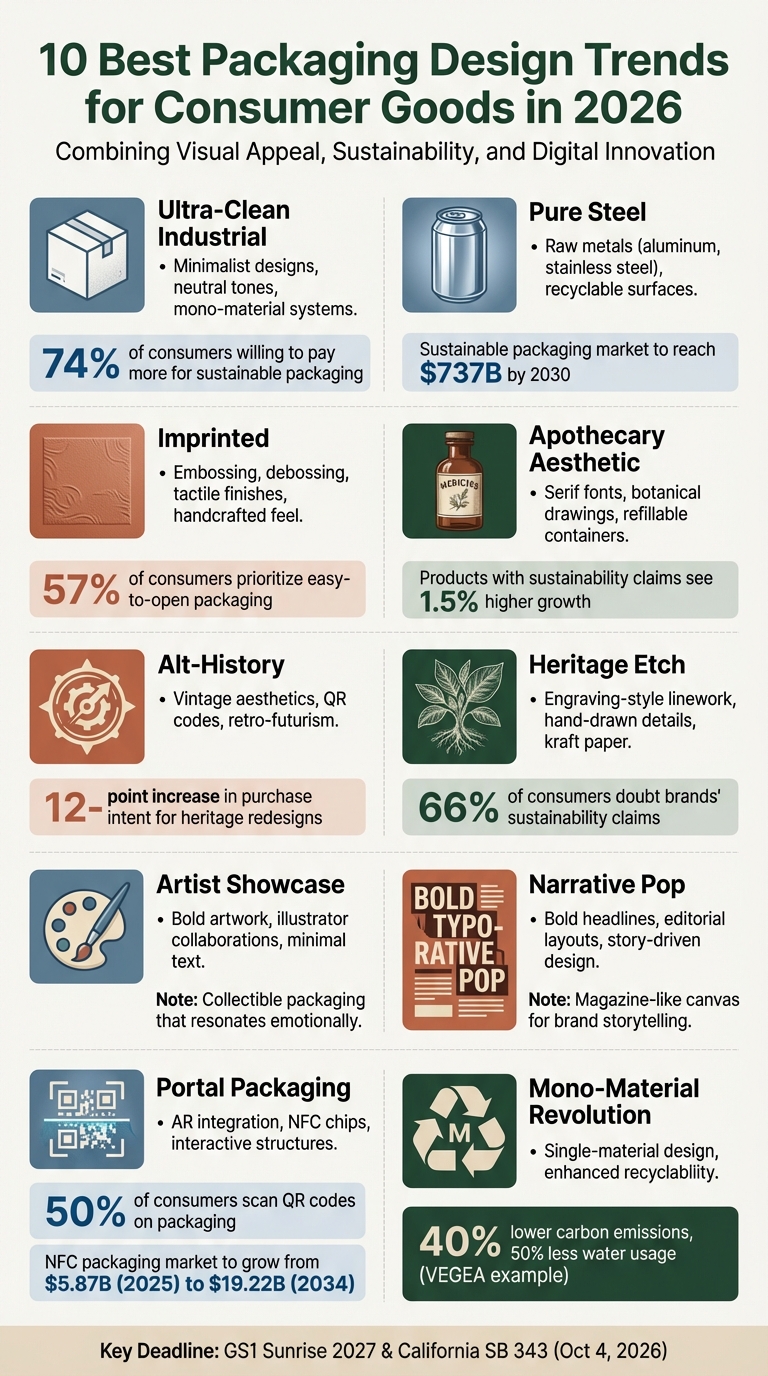
- **Ultra-Clean Industrial**: Minimalist designs with clean lines and neutral tones, paired with advanced materials like mono-material systems for easier recycling.
- **Pure Steel**: Raw metals such as aluminum and stainless steel create a sleek, modern look while supporting recyclability.
- **Imprinted**: Tactile elements like embossing and textured finishes add a personal, handcrafted feel.
- **Apothecary Aesthetic**: Vintage-inspired designs with serif fonts, botanical drawings, and refillable containers.
- **Alt-History**: Retro-futuristic packaging that blends nostalgia with modern details like QR codes.
- **Heritage Etch**: Hand-drawn illustrations and textured materials convey craftsmanship and tradition.
- **Artist Showcase**: Bold, collectible packaging featuring artwork from illustrators, with minimal text.
- **Narrative Pop**: Typography-focused designs that tell a brand’s story through bold headlines and structured layouts.
- **Portal Packaging**: Interactive designs with structural creativity and digital features like AR and NFC.
- **Mono-Material Revolution**: Single-material packaging enhances recyclability and reduces waste.
These trends highlight the importance of combining visual appeal, usability, and sustainability to connect with today’s consumers.
10 Packaging Design Trends for Consumer Goods in 2026
## 1. Ultra-Clean Industrial
The Ultra-Clean Industrial trend shifts packaging design toward clean lines, neutral colors, and precise finishes that exude a sense of premium quality. This "subtle luxury" style has become a hallmark for brands aiming to project sophistication through simplicity rather than ornate details.
### Visual Appeal and Branding Impact
This minimalist approach often incorporates pharmaceutical-style labels, generous white space, and matte or brushed-metal finishes, embodying what industry insiders call "confident simplicity". A standout example is The Ordinary (DECIEM), which uses flat, clinical labels with neutral tones and ample white space, reinforcing its science-driven identity.
> "2026 is shaping up to be a year where packaging steps beyond function and becomes a language of its own... from the polish of industrial precision to bold color stories." – Daniel Hinde
This precise, clean aesthetic not only elevates brand image but also opens doors to more environmentally conscious design choices.
### Sustainability and Eco-Friendliness
Minimalist packaging naturally aligns with eco-conscious practices. For instance, in October 2025, Johnnie Walker (Diageo) introduced the "Blue Label Ultra", featuring a hand-blown teardrop bottle weighing just 180 g (6.35 oz), nearly halving the weight of a standard 700 mL (24 fl oz) glass bottle. This design innovation cut carbon emissions by 335 grams (about 11.8 oz) per bottle. Additionally, the use of mono-material systems, like all-aluminum caps, simplifies recycling while maintaining the industrial aesthetic. With 74% of consumers willing to pay more for sustainable packaging, this approach meets both environmental goals and market demands.
### Functionality and User Experience
Sleek design doesn’t have to sacrifice usability. Many brands are combining the industrial look with practical features like laser scoring and easy-peel technologies, addressing the needs of the 57% of consumers who prioritize easy-to-open packaging. In January 2026, Printpack showcased its Reseal-It technology paired with laser scoring for flexible, on-the-go packaging solutions. Inclusive design is also gaining traction; in 2025, Olay (Procter & Gamble) added tactile markers and Braille to its bottles, making them more accessible to visually impaired users.
These innovations enhance the consumer experience while staying true to the minimalist aesthetic.
### Innovative Use of Materials and Technology
Minimalist designs are increasingly integrating advanced materials and technology. Brushed metal finishes, embedded 2D barcodes, and NFC tags combine sleek aesthetics with digital functionality. In 2025, Nestlé introduced AI-powered QR codes on [KitKat](https://www.kitkat.com/) and Quality Street packaging in the UK, offering real-time recipes and recycling tips. Similarly, [WestRock](https://www.westrock.com/) developed smart pizza boxes with QR codes to guide consumers on recycling industrial-grade corrugated materials. These features demonstrate that streamlined packaging can still deliver a wealth of information, blending simplicity with utility.
###### sbb-itb-0c3a5ed
## 2. Pure Steel
Pure Steel takes luxury packaging to a new level by embracing raw metals like aluminum and stainless steel. These materials showcase unbleached, visibly recycled surfaces, offering a fresh take on sustainable luxury. Steering away from purely industrial minimalism, Pure Steel emphasizes the tactile qualities of raw metals, combining them with bold geometric designs, sharp angles, and polished chrome finishes. The result? A packaging style that stands out on shelves and exudes timeless sophistication.
### Visual Appeal and Branding Impact
Metallic surfaces bring a unique edge to branding through their tactile finishes, which range from soft matte textures to gritty, textured feels. These details enhance the perception of quality and value. Clean geometric designs, paired with subtle design twists, create a visual identity that feels both precise and approachable.
> "Silver, chrome, and brushed metals communicate precision, strength, and innovation. Paired with clean type, muted palettes, and carefully placed highlights, packaging feels engineered yet approachable." – Greatergood
A great example of this approach is the NASA Candle Collection by Brevrn, which earned a Dieline Award in 2025. Its stainless steel design features a corrugated double-door box with an intricate mechanical ejection system. Similarly, the AEVUM Longevity Supplement uses a "Liquid Steel & Chrome" aesthetic, with polished metallic finishes that convey innovation and modernity. These designs seamlessly blend strong visual appeal with eco-conscious practices.
### Sustainability and Eco-Friendliness
Aluminum stands out as a hero material for its ability to be endlessly recycled without losing quality, making it ideal for circular economies. The sustainable packaging market is expected to hit $737 billion by 2030, and 74% of consumers say they’re willing to pay extra for sustainable options. The 2025 Boomii Balm Case exemplifies this shift - it’s made from recycled aluminum and features a reusable stainless-steel refill system, transforming packaging from disposable to durable and cherished.
### Functionality and User Experience
Metal packaging isn’t just about aesthetics - it also enhances usability. Magnetic closures provide a satisfying "click" and make access easier for users, including those with limited hand strength. The cool, smooth touch of metal reinforces its premium image, while single-material designs simplify recycling and comply with regulations like California's SB 343. Additionally, resealable features, valued by 50% of consumers, help extend product shelf life.
### Innovative Use of Materials and Technology
Advanced techniques like anodizing improve the durability of metal packaging while adding unique metallic effects that emphasize precision and modernity. Designers also leverage the three-dimensional nature of metal packaging to reinforce brand identity, using distinctive shapes to communicate a brand’s voice.
> "Brands are favoring paper, aluminium, and even going unpackaged to reduce their environmental footprint. It's all about being innovative, responsible, and 100% honest." – Claire Hoe
Some luxury brands are even integrating blockchain technology with metal packaging to track authenticity and provenance. Over 20 million luxury items already have digital identities thanks to this innovation. These advancements highlight how Pure Steel combines enduring material quality with cutting-edge technology, creating packaging that’s as forward-thinking as it is enduring.
## 3. Imprinted
Imprinted packaging adds a hands-on, tactile quality to consumer goods, using techniques like embossing, debossing, and raised patterns. This approach shifts focus from sleek, polished finishes to more handcrafted aesthetics, such as charcoal sketches and linocut-inspired etchings. The result? Packaging that feels personal and thoughtfully made, creating a deeper emotional connection with consumers.
### Visual Appeal and Branding Impact
Imprinted designs bring a sense of luxury through touch rather than overloading visuals. Techniques like soft-touch matte coatings or foil embossing allow for minimalist designs that still stand out. For example, [Perrier-Jouët](https://www.perrier-jouet.com/en-us) incorporates debossed flower petals into their eco-friendly gift boxes, blending elegance with tradition. Meanwhile, [Oatly](https://www.oatly.com/en-us)’s use of hand-drawn illustrations and handwritten slogans projects a bold and approachable brand identity.
Brands like Wener Skincare use unique imprinted textures on each product bottle to highlight individuality, while [Milton Star Cider](https://pkgbranding.com/) opts for manuscript-style typography and playful doodles to convey a youthful vibe. This mix of artistic detail and texture opens the door to creative material uses.
### Innovative Use of Materials and Technology
Modern imprinting techniques are merging eco-conscious goals with high-end design. For instance, soy- and water-based inks are replacing petroleum-based options, reducing volatile organic compounds (VOCs) and making recycling easier. Advanced technologies like [Scodix](https://scodix.com/) allow for raised UV varnishes and textured finishes without the need for costly traditional tools, making tactile packaging more attainable.
> "Elegance goes beyond what you see—it's about what you experience." – Kevin Keating, President, PKG Brand Design
Digital printing innovations, such as Variable Data Printing (VDP), let brands create personalized packaging with unique imprints, names, or messages for every item in a production run. This personalization ties into the growing demand for sustainable and meaningful consumer experiences. The sustainable packaging market, projected to hit $737 billion by 2030, highlights how imprinted textures on kraft paper and matte finishes can serve as tangible proof of a brand’s environmental commitment.
### Functionality and User Experience
Beyond aesthetics, imprinted designs improve functionality. Textured surfaces offer better grip for portable products, while laser scoring ensures precise imprinted lines that make packaging easier to open and reseal. Products with verified sustainability claims have also experienced 1.5% higher growth compared to non-sustainable options.
> "Incorporating physical textures elevates the premium caliber of a design, providing a sense of luxury that doesn't rely on overwhelming visuals." – Kevin Keating, PKG Brand Design
This minimalist, tactile trend challenges the pursuit of digital perfection. By embracing smudged textures and imperfect lines, brands signal authenticity and craftsmanship, showing that their products are made with care.
## 4. Apothecary Aesthetic
The apothecary aesthetic brings a touch of history to modern packaging by combining elements of vintage pharmacy design with contemporary trends. Think clean lines, serif fonts, botanical drawings, and intricate etchings that echo the charm of old-world medicine bottles. While this style once belonged to the realms of medicines and perfumes, it has now expanded to include pantry staples, wellness products, and lifestyle brands aiming to highlight heritage and natural ingredients.
### Visual Appeal and Branding Impact
One of the most striking features of this aesthetic is its structured and balanced layout, which naturally inspires trust. Brands often use matte finishes, letterpress details, and textured materials to evoke a sense of craftsmanship and timeless quality. These elements, reminiscent of historical tinctures and medicinal packaging, create a "science-forward" impression that appeals to consumers looking for natural and high-quality products.
> "The look is defined by clean symmetry, classic serif fonts, and visuals inspired by botanical drawings, old scientific diagrams, and vintage etchings." – MAVRK Studio
Modern interpretations of this style, often called Apothecary 2.0, merge vintage layouts with bold colors and contemporary photography. This clever mix helps brands connect with younger audiences while maintaining a polished and professional image. With only a few seconds to catch a shopper's eye on a crowded shelf, the clarity and thoughtful design of this aesthetic offer a competitive advantage. Plus, its visual storytelling aligns effortlessly with eco-conscious values.
### Sustainability and Eco-Friendliness
The apothecary aesthetic naturally lends itself to sustainability by prioritizing durable, reusable packaging over disposable options. Many brands are shifting to refillable containers, encouraging consumers to think of their packaging as long-lasting rather than throwaway. Materials like mono-material hardware simplify recycling, while lightweight glass designs cut material use by over 50%, significantly reducing carbon emissions.
> "In 2026, luxury no longer means heavy glass and excess material - it means restraint, precision, and purpose." – Jim Lin, Zenpack
Other eco-friendly touches include uncoated kraft paperboard, soy-based inks, and natural textures, which eliminate the need for plastic coatings or laminates. These choices not only reduce waste but also reinforce the heritage-driven narrative that defines this aesthetic. Products with verified sustainability claims have seen a 1.5% higher growth rate compared to their counterparts, proving that consumers are drawn to brands that align with their values.
### Innovative Use of Materials and Technology
Modern apothecary packaging goes beyond aesthetics by embracing functionality and innovation. Features like magnetic closures, ergonomic designs for easy handling, and laser scoring for effortless opening elevate the user experience. QR codes integrated into vintage-style labels provide transparency about sourcing and recycling, with 79% of shoppers more likely to purchase products offering scannable codes.
> "Packaging is becoming a language: one that communicates care, transparency, and innovation through every texture, substrate, and unboxing moment." – Zenpack
Accessibility is also a growing focus, with brands incorporating Atkinson Hyperlegible typefaces and Braille into their designs. The fusion of vintage charm with cutting-edge technology highlights how this aesthetic is evolving to meet modern consumer needs, blending timeless elegance with practical innovation.
## 5. Alt-History
Alt-History takes a creative dive into the past, merging vintage aesthetics with modern design elements. Often referred to as Retro-Futurism, this trend draws inspiration from eras like the '70s disco scene and '90s pixel art, creating a style that feels both nostalgic and current. Unlike simple throwback designs, Alt-History incorporates **hand-drawn details, archival typography, and engraving-style linework**, giving it a distinctly human touch in a world increasingly dominated by digital precision.
### Visual Appeal and Branding Impact
Alt-History thrives on storytelling through familiar historical visuals, which evoke trust and a sense of connection. Design elements like **flourished monograms, botanical illustrations, and vintage frames** - reminiscent of old bookplates or currency - help brands establish a legacy that feels genuine and irreplaceable by algorithms. For example, in 2025, British chocolate brand [**Bourneville**](https://www.cadbury.co.uk/products/brands/bournville/) brought back its ornate ‘B’ logo from 1908, blending its heritage with a modernized design. This move, described as a nod to “rich culinary roots and regional charm,” led to a **12-point increase in purchase intent** for one heritage brand redesign.
> "Nostalgia remains a powerful cue during uncertain times. Retro-inspired colors, typography, and limited-edition throwbacks create emotional resonance and encourage consumers to try a new product." – Nicole Karamallakis, Consumer & Packaging Insight Specialist, Printpack
This trend also embraces **raw, hand-drawn details that feel intentionally imperfect**, offering a refreshing alternative to the sterile look of AI-generated graphics. Brands like **Spice Dept.** use utilitarian designs paired with pastel tones and traditional retail stickers, evoking the charm of vintage food stores. These designs resonate particularly with 18–44-year-olds who value authenticity and often discover products through social media.
### Sustainability and Eco-Friendliness
Alt-History aligns naturally with sustainable design practices, as its aesthetic celebrates **texture and imperfection**. Materials like uncoated kraft paperboard, molded fiber, and textured papers enhance the tactile experience while supporting eco-friendly goals. In 2025, the brand [**Pueblo**](https://worldbranddesign.com/pueblo-spanish-cold-meat-brand-and-packaging-design-by-simple-packaging-studio/) earned a [Pentawards](https://pentawards.com/) Platinum award for its cold meat packaging, which used earthy tones like clay reds and straw yellows on uncoated kraft paperboard to evoke the feel of traditional Spanish village life.
Another standout example is the [Stella McCartney](https://www.stellamccartney.com/gb/en/stellas-world/about-stella-mccartney.html?srsltid=AfmBOoq3eGLXnh0PsvKFhVTGsSa79QsyyykbHBjnR5Iul2XRS_-uOtV2) × [Veuve Clicquot](https://www.veuveclicquot.com/en-us/homepage.html) collaboration. They introduced a champagne bottle holder made from [**VEGEA**](https://www.vegeacompany.com/), a grape-based vegan leather sourced from vineyard byproducts. This innovative material reduced carbon emissions by **40%** and cut water usage by **50%** compared to fossil-based alternatives.
### Innovative Use of Materials and Technology
Alt-History packaging bridges the past and future by embedding **QR codes and AR features** into its nostalgic designs. These additions let consumers explore product stories or recycling tips without disrupting the vintage aesthetic. This approach is particularly timely as brands prepare for the [**GS1**](https://www.gs1.org/) **Sunrise 2027** transition to 2D barcodes, which can seamlessly integrate into retro designs while enhancing digital interactions.
Tactile finishes further enhance the sensory appeal. **Soft-touch matte coatings, embossing, and textured papers** convey a sense of understated luxury and timeless quality, all while avoiding non-recyclable metallics. Combining hand-drawn botanical illustrations with sustainable materials and modern tamper-evident seals illustrates how Alt-History successfully blends vintage charm with today’s safety and environmental standards. This seamless fusion of heritage and innovation sets the stage for even more creative packaging trends in the future.
## 6. Heritage Etch
Heritage Etch blends vintage engraving techniques with modern packaging design, placing a strong focus on hand-drawn details rather than digital precision. This style incorporates engraving-inspired linework reminiscent of old currency, botanical illustrations, classical serif fonts, and ornate frames that evoke an artisanal vibe. It builds on the popularity of minimalist aesthetics and the revival of vintage styles, highlighting the importance of craftsmanship.
### Visual Appeal and Branding Impact
Heritage Etch stands out by embracing warm, handcrafted elements that contrast with the uniformity of digital design. Its balance of intricate illustrations and simple layouts lets the artistry take center stage without overwhelming the overall look. Brands often lean on earthy color schemes - think clay reds, straw yellows, and other natural tones - to evoke trust and a sense of rootedness in tradition.
> "When packaging clearly shows the hand of a craftsperson, it creates emotional connection and perceived value that mass-produced designs cannot match. The message is clear: Someone made this with care." – QinPrinting
For example, one heritage-inspired brand redesign saw a 12-point jump in purchase intent, proving that designs rooted in authenticity can drive both emotional engagement and sales.
### Sustainability and Eco-Friendliness
Staying true to its handmade essence, Heritage Etch naturally aligns with eco-conscious values. It often incorporates materials like kraft paper, glass, and matte finishes to convey authenticity and reduce environmental impact. The use of biodegradable inks and a preference for raw, tactile textures over glossy plastics reflect a commitment to sustainability. By focusing on simple, sketch-like designs and linocut-inspired visuals, brands can cut down on visual clutter and conserve printing resources. With 66% of consumers expressing doubts about the sincerity of brands' sustainability claims, the human touch of hand-drawn elements helps build trust and credibility.
### Innovative Use of Materials and Technology
Heritage Etch achieves its timeless look through thoughtful material choices and tactile design techniques. Letterpress effects, soft-touch matte coatings, and textured finishes give packaging a crafted, aged feel. Uncoated kraft paperboard, with its natural imperfections, adds to the rustic charm, while embossing and textured accents invite consumers to engage with the design through touch. This understated luxury is achieved without relying on non-recyclable materials.
Many brands are also rediscovering their roots through Heritage Revival techniques, incorporating local designs and traditional methods into their packaging. This approach ties their legacy to modern values, presenting heritage as a premium feature while maintaining recyclability and environmental responsibility. Heritage Etch proves that today’s design can celebrate history while embracing eco-friendly practices.
## 7. Artist Showcase
The **Artist Showcase** trend turns packaging into a stage for illustrators, creating bold, collectible designs that grab attention. This approach breaks away from the uniformity of corporate branding, instead embracing **illustrative lines, painted textures, and street-art-inspired elements**. Here, the artist’s vision takes precedence, with minimal typography ensuring the artwork remains the focal point.
### Visual Appeal and Branding Impact
Artist-led designs bring a personal, emotional depth that AI-generated graphics often lack. A great example of this is [Coca-Cola](https://www.coca-cola.com/us/en)’s 2025 collaboration with [Marvel](https://www.marvel.com/), where product cans became limited-edition collectibles featuring character-driven illustrations. This partnership tapped into fan culture, boosting brand loyalty. Similarly, the non-profit Gifted by [Freefrom](https://www.freefrom.org/) received [the Dieline](https://thedieline.com/) Design for Good award for packaging that combined activist typography with soft pastel tones, supporting survivors and furthering their mission.
> "Standout companies will be the ones whose packaging feels authentic and human, moving past basic aesthetics to combine true craftsmanship with modern design." – Kevin Keating, President, PKG Brand Design
This trend also leans into local authenticity. Take the 2025 Pentawards Platinum-winning brand Pueblo, which celebrated rural Spain through packaging designed by [Simple Packaging Studio](https://simplepackagingstudio.com/). The design featured earthy clay reds, straw yellows, and typography inspired by Spanish hand-painted signage and folk textiles. These elements reclaimed pride in local craftsmanship and rejected the neutrality of algorithmic design, offering a deeply emotional and specific connection for consumers.
### Functionality and User Experience
While creativity takes center stage, usability isn’t overlooked. Packaging in the Artist Showcase trend incorporates practical elements like resealable pouches, ergonomic shapes, and easy-open designs, ensuring convenience matches visual appeal. With 50% of consumers scanning QR codes on packaging, brands can include digital links to artist stories without detracting from the design. Techniques like embossing, debossing, and soft-touch coatings add a tactile layer, enhancing the sense of luxury and encouraging consumers to keep the packaging as a memento long after the product is gone. By blending artistry with functionality, this trend continues to redefine how packaging engages and connects with consumers.
## 8. Narrative Pop
Narrative Pop takes packaging design to a new level by turning it into a platform for storytelling. This trend puts text front and center, making typography the star of the show. Using editorial-style layouts, bold headlines, and structured grids, packaging becomes more than just a container - it becomes a magazine-like canvas that shares a brand's purpose, values, and product details. Instead of relying heavily on visuals, Narrative Pop invites consumers to slow down and engage directly with the written word, blending functionality with creative storytelling.
### Visual Appeal and Branding Impact
This approach works especially well for brands that have a deeper story to tell. Think specialty coffee, wine, functional beverages, or companies with a focus on sustainability. A great example is Jane & Mary's, which uses text-driven packaging to highlight their values and intentions in a sleek, editorial layout. RXBar also nails this style with its bold ingredient lists right on the front of the package, building trust and transparency while fitting perfectly into the Narrative Pop aesthetic. By using grids and pull quotes, brands can achieve a polished, premium look that cuts through the visual noise of crowded shelves.
### Functionality and User Experience
While text-heavy designs are eye-catching, they need to stay functional. A clear visual hierarchy is key so that shoppers can grasp the main message within the few seconds they typically spend scanning a product in-store. High-contrast typography not only enhances readability but also ensures accessibility for those with low vision, all without compromising the editorial vibe. To keep packaging clean and uncluttered, brands can add QR codes or NFC technology, allowing consumers to dive deeper into the story online. This balance between storytelling and usability ensures that brands can communicate transparency, values, and sustainable practices while delivering an engaging unboxing experience. It’s another example of how packaging can combine creativity and functionality in meaningful ways.
> "With AI-generated images everywhere, people are naturally seeking out designs that feel real and authentically human." Kevin Keating, PKG Brand Design
Portal Packaging transforms a simple box into an immersive experience, combining clever structural design and digital technology to create an unforgettable unboxing moment. Think of it as turning packaging into a theatrical reveal. Features like clear windows highlight product authenticity, while advanced elements such as mechanical ejection systems and layered compartments add a sense of sophistication. A standout example is the NASA Candle Collection by Brevrn, which won "Best of Home" at the 2025 Dieline Awards. Its corrugated double-door design and spacecraft-inspired ejection mechanism set a new standard for packaging innovation. This approach also seamlessly integrates digital content with physical interactivity, pushing the boundaries of what packaging can do.
### Visual Appeal and Branding Impact
Portal Packaging doesn’t just hold a product - it creates moments worth sharing. For instance, in April 2019, [Jack Daniel's](https://www.jackdaniels.com/en) introduced AR-enabled packaging that turned bottle labels into a virtual pop-up book. This campaign saw over 30,000 users engage with 110,000 AR interactions within its first month, with each session averaging nearly six minutes. The potential for this type of packaging is massive. By 2034, the NFC-embedded packaging market is expected to grow from $5.87 billion in 2025 to $19.22 billion. [Clinique](https://www.clinique.com/) has already embraced this trend with its 2022 launch of NFC-enabled skincare packaging, offering users access to personalized tips and exclusive content through embedded chips.
> "The digital layer of packaging creates new touchpoints for customer engagement - exclusive offers, personalized services, loyalty programs, and even augmented reality experiences." – Neon Zhang, Sales and Customer Support, QinPrinting
This blend of visual impact and cutting-edge tech is redefining how brands connect with their customers.
### Innovative Use of Materials and Technology
Portal Packaging uses tools like NFC chips, 2D barcodes, and AR triggers to bridge the gap between physical products and digital content. For example, nearly half of consumers now scan QR codes on packaging. As part of the GS1 Sunrise 2027 initiative, retailers are preparing to adopt 2D barcodes at checkout, which will enhance both consumer engagement and inventory management. AI personalization takes this further by delivering location-specific content, such as tailored recycling instructions. For accessibility, NaviLens codes allow visually impaired users to scan product details from up to 10 feet away, making packaging more inclusive.
### Functionality and User Experience
Portal Packaging goes beyond aesthetics to deliver a hands-on, engaging experience. Hidden messages, interior prints, and layered compartments encourage consumers to share their unboxing moments on social media. Features like tactile elements enhance the feeling of ownership. For example, the NASA Candle Collection includes Red Zone™ wax, which changes color to indicate safety limits - a perfect mix of interactivity and practicality. Brands looking to start small can use QR codes that link to tutorials or brand stories and gradually adopt AR/VR elements. This approach also supports transparency with Digital Product Passports, which verify authenticity, trace sourcing, and provide recycling guidance - addressing concerns about greenwashing.
## 10. Mono-Material Revolution
Mono-material packaging simplifies recycling by using a single material - like 100% polyethylene, polypropylene, or aluminum - eliminating the need to separate mixed components. This approach makes recycling more efficient and reduces waste, setting the stage for impactful environmental progress.
### Sustainability and Eco-Friendliness
Mono-material packaging aligns with the growing demand for eco-conscious designs. Its primary advantage lies in maintaining recycling stream purity. Since these packages are made from a single material type, recycling facilities can process them more efficiently without the need for energy-intensive chemical or mechanical separation. This efficiency translates to reduced carbon emissions throughout the lifecycle of the packaging.
A notable example of innovative material use is a collaboration between Stella McCartney and Veuve Clicquot in October 2024. They created a luxury accessory line using VEGEA - a vegan leather derived from 80% renewable and recycled plant-based elements. This material achieved 40% lower carbon emissions and used 50% less water compared to traditional synthetic leathers.
### Innovative Use of Materials and Technology
Advancements in mono-materials now allow them to rival the performance of complex multi-layer films while maintaining product protection. Materials like polyethylene (PE), polypropylene (PP), and polyethylene terephthalate (PET) are being optimized to provide moisture and air barriers without requiring additional layers.
Bio-based alternatives are also making waves. For instance, Wild Body Wash 2.0 introduced a refill system in 2024 using [Shellworks](https://www.shellworks.com/)' Vivomer, a biomaterial that biodegrades entirely in home compost or marine environments. These 300 mL refills are waterproof and stable in use but break down faster than a banana peel once discarded.
Brands are also incorporating smart technologies, such as QR codes and NFC chips, into mono-material packaging. These additions enhance digital transparency and consumer engagement without compromising recyclability. This combination of sustainability and technology simplifies both usage and disposal for consumers.
### Functionality and User Experience
Mono-material packaging meets the growing consumer demand for easy-to-recycle products. These designs are curbside-friendly and intuitive, encouraging proper recycling and fostering brand loyalty. For businesses, mono-materials reduce production complexity, cut costs, and streamline material sourcing.
To transition, start by analyzing your current packaging. Identify every material and component, then redesign with a single-material approach. If using multiple materials is unavoidable, ensure they can be easily disassembled without tools. Clear labeling with certifications like [How2Recycle](https://how2recycle.info/) builds consumer trust and ensures proper disposal.
> "Mono-material packaging offers a simple, sustainable solution." – Arka
## Conclusion
The packaging trends discussed - ranging from Ultra-Clean Industrial designs to the Mono-Material Revolution - go beyond simple visual updates. They mirror deeper changes in what consumers expect and how markets are evolving. Features like *sustainability*, *accessibility*, and *portability* are no longer optional - they’re now the baseline for what modern shoppers demand. This means every detail in your packaging has to work smarter to grab attention and convey your brand’s message.
You’ve got just 3–5 seconds to catch someone’s eye on a shelf. In that fleeting moment, your packaging needs to showcase your product’s value, meet strict regulations, and create an emotional connection. For example, half of consumers are likely to scan a QR code for more product details, while 57% say they value easy-to-open designs.
Take a closer look at your packaging. Are there ways to make it more efficient in terms of materials or more user-friendly? Incorporating features like ergonomic grips or high-contrast typography can make a big difference. At the same time, ensure you’re ready for upcoming requirements like GS1 Sunrise 2027 and California’s SB 343 compliance deadline on October 4, 2026.
The best brands succeed both in physical stores and online. Whether your product is sitting on a retail shelf or appearing as a thumbnail on TikTok Shop, your packaging has to stop people in their tracks and communicate its purpose instantly. By embracing these trends, you can turn packaging into more than just a container - it becomes a powerful marketing tool that builds trust, drives sales, and broadens your audience.
## FAQs
### What are the best ways for brands to incorporate sustainability into their packaging design?
Brands can rethink their packaging by opting for materials that are kinder to the planet, such as recycled paper, compostable films, or lightweight metals. These choices not only lower the impact on the environment but also make products more appealing to shoppers who prioritize eco-friendly options.
Another smart move is designing packaging with **recyclability** or **reusability** in mind. Packaging that can be reused or easily recycled helps cut down on waste and supports a circular economy. Adding clear labels that highlight these sustainable features can go a long way in building trust and demonstrating a brand’s dedication to responsible practices.
In the end, adopting sustainable packaging means carefully selecting materials, thinking creatively about design, and being upfront about efforts to connect with today’s environmentally conscious consumers.
### How is technology improving the way consumers interact with packaging?
Technology is reshaping the way brands approach packaging, turning it into a tool for creating more engaging and tailored experiences for customers. **Smart packaging**, for example, uses features like QR codes to connect consumers directly to extra product information, usage tips, or even special promotions - all accessible with just a smartphone. These features can also make packaging more accessible by including options like multiple languages, adjustable font sizes, or audio instructions.
Another game-changer? **Augmented reality (AR)**. This technology transforms packaging into an interactive experience, allowing brands to tell their story in a way that feels immersive and memorable. AR can animate a product’s history, showcase its features, or even entertain, creating a deeper connection with the consumer. With these advancements, packaging is no longer just a container - it’s becoming a powerful communication and loyalty-building tool.
### Why is minimalist packaging design so popular today?
Minimalist packaging design is becoming a go-to choice for brands because it prioritizes simplicity and clarity, making products stand out more effectively. By stripping away excess elements and focusing on clean lines, neutral tones, and generous white space, this style helps products grab attention in crowded stores and busy online platforms.
It’s not just about aesthetics - minimalist packaging also delivers a sleek, modern vibe that appeals to customers looking for sustainability and honesty. By using fewer materials and presenting messages more directly, this design style connects with today’s shoppers who value thoughtful design and eco-conscious choices.
## Related Blog Posts
- [How Strategic Packaging Design Increases Sales](https://www.pkgbranding.com/blog/strategic-packaging-design-increases-sales)
- [5 Common Packaging Design Mistakes and How to Fix Them](https://www.pkgbranding.com/blog/common-packaging-design-mistakes-how-to-fix)
- [The Complete Guide to Structural Packaging Design](https://www.pkgbranding.com/blog/complete-guide-structural-packaging-design)
- [2026 Packaging Color Trends](https://www.pkgbranding.com/blog/2026-packaging-color-trends)
- [Facebook Share ](https://www.facebook.com/sharer/sharer.php?u=https%3A%2F%2Fwww.pkgbranding.com%2Fblog%2Fbest-packaging-design-trends-consumer-goods)
- [Twitter Share ](https://twitter.com/home?status=10+Best+Packaging+Design+Trends+for+Consumer+Goods%20https%3A%2F%2Fwww.pkgbranding.com%2Fblog%2Fbest-packaging-design-trends-consumer-goods)
- [LinkedIn Share ](https://www.linkedin.com/shareArticle?mini=true&url=https%3A%2F%2Fwww.pkgbranding.com%2Fblog%2Fbest-packaging-design-trends-consumer-goods&title=10%20Best%20Packaging%20Design%20Trends%20for%20Consumer%20Goods&summary=Packaging+in+2026+proves+design+must+marry+minimalist+style%2C+sustainability%2C+tactile+craft%2C+and+smart+tech+to+win+consumers.&source=)
- [Email Share ](mailto:?subject=10%20Best%20Packaging%20Design%20Trends%20for%20Consumer%20Goods&body=https%3A%2F%2Fwww.pkgbranding.com%2Fblog%2Fbest-packaging-design-trends-consumer-goods)
### Topics
- [Blog](https://www.pkgbranding.com/blog/topic/blog)
### Related Posts
[ How Multisensory Packaging Impacts Brand Loyalty Kevin Keating at PKG ](https://www.pkgbranding.com/blog/multisensory-packaging-impacts-brand-loyalty) [ 7 Emotional Triggers That Drive Packaging Success Kevin Keating at PKG ](https://www.pkgbranding.com/blog/emotional-triggers-packaging-success) [ How Social Media Listening Improves Packaging Design Kevin Keating at PKG ](https://www.pkgbranding.com/blog/social-media-listening-improves-packaging-design)
### Subscribe Now!
### Subscribe Now!
**Awarded Top 50**
**Package Design ****Blog**
[](http://blog.feedspot.com/packaging_design_blogs/)
- [How Multisensory Packaging Impacts Brand Loyalty](https://www.pkgbranding.com/blog/multisensory-packaging-impacts-brand-loyalty)
- [7 Emotional Triggers That Drive Packaging Success](https://www.pkgbranding.com/blog/emotional-triggers-packaging-success)
- [How Social Media Listening Improves Packaging Design](https://www.pkgbranding.com/blog/social-media-listening-improves-packaging-design)
- [11 Examples of Functional Packaging Features](https://www.pkgbranding.com/blog/functional-packaging-features-examples)
- [Competitor Analysis for Shelf Differentiation](https://www.pkgbranding.com/blog/competitor-analysis-for-shelf-differentiation)
- [Typography Checklist for Packaging](https://www.pkgbranding.com/blog/typography-checklist-packaging)
- [Top Biodegradable Packaging Myths Consumers Believe](https://www.pkgbranding.com/blog/biodegradable-packaging-myths-consumers-believe)
- [Macro Photography for Food Packaging Design](https://www.pkgbranding.com/blog/macro-photography-food-packaging-design)
- [Glass Packaging Benefits for CPG Brands](https://www.pkgbranding.com/blog/glass-packaging-benefits-cpg-brands)
- [Pet Food Packaging: FDA Rules to Know](https://www.pkgbranding.com/blog/pet-food-packaging-fda-rules)

Recognized as a
Top Package Design Agency
on [DesignRush](https://www.designrush.com/agency/package-design)
PKG BRAND DESIGN
2045 W Grand Ave, STE B-27332
Chicago, IL 60612-1576
[312.870.9101](tel:+1.312.870.9101)
 [Request a Free Consultation](https://www.pkgbranding.com/request-a-consultation)
[](https://www.hangar-12.com/)
© 2026 PKG Brand Design. All Rights Reserved

```json
{
"@context" : "http://schema.org",
"@type" : "BlogPosting",
"author" : {
"@type" : "Person",
"name" : "Kevin Keating at PKG"
},
"dateModified" : "February 24, 2026, 5:56:26 AM",
"datePublished" : "2026-01-30 04:13:37",
"description" : "Packaging in 2026 proves design must marry minimalist style, sustainability, tactile craft, and smart tech to win consumers.",
"headline" : "10 Best Packaging Design Trends for Consumer Goods",
"image" : {
"@type" : "ImageObject",
"url" : "https://assets.seobotai.com/cdn-cgi/image/quality=75,w=1536,h=1024/pkgbranding.com/697bfb540bb6b48a4100c9ff-1769746496231.jpg"
},
"publisher" : {
"@type" : "Organization",
"logo" : {
"@type" : "ImageObject",
"url" : "https://cdn2.hubspot.net/hubfs/537000/PKG-1.png"
},
"name" : "PKG Brand Design"
}
}
```
```json
{
"@context" : "https://schema.org",
"@type" : "FAQPage",
"mainEntity" : [ {
"@type" : "Question",
"acceptedAnswer" : {
"@type" : "Answer",
"text" : "Brands can rethink their packaging by opting for materials that are kinder to the planet, such as recycled paper, compostable films, or lightweight metals. These choices not only lower the impact on the environment but also make products more appealing to shoppers who prioritize eco-friendly options.
Another smart move is designing packaging with recyclability or reusability in mind. Packaging that can be reused or easily recycled helps cut down on waste and supports a circular economy. Adding clear labels that highlight these sustainable features can go a long way in building trust and demonstrating a brand’s dedication to responsible practices.
In the end, adopting sustainable packaging means carefully selecting materials, thinking creatively about design, and being upfront about efforts to connect with today’s environmentally conscious consumers.
"
},
"name" : "What are the best ways for brands to incorporate sustainability into their packaging design?"
}, {
"@type" : "Question",
"acceptedAnswer" : {
"@type" : "Answer",
"text" : "Technology is reshaping the way brands approach packaging, turning it into a tool for creating more engaging and tailored experiences for customers. Smart packaging, for example, uses features like QR codes to connect consumers directly to extra product information, usage tips, or even special promotions - all accessible with just a smartphone. These features can also make packaging more accessible by including options like multiple languages, adjustable font sizes, or audio instructions.
Another game-changer? Augmented reality (AR). This technology transforms packaging into an interactive experience, allowing brands to tell their story in a way that feels immersive and memorable. AR can animate a product’s history, showcase its features, or even entertain, creating a deeper connection with the consumer. With these advancements, packaging is no longer just a container - it’s becoming a powerful communication and loyalty-building tool.
"
},
"name" : "How is technology improving the way consumers interact with packaging?"
}, {
"@type" : "Question",
"acceptedAnswer" : {
"@type" : "Answer",
"text" : "Minimalist packaging design is becoming a go-to choice for brands because it prioritizes simplicity and clarity, making products stand out more effectively. By stripping away excess elements and focusing on clean lines, neutral tones, and generous white space, this style helps products grab attention in crowded stores and busy online platforms.
It’s not just about aesthetics - minimalist packaging also delivers a sleek, modern vibe that appeals to customers looking for sustainability and honesty. By using fewer materials and presenting messages more directly, this design style connects with today’s shoppers who value thoughtful design and eco-conscious choices.
"
},
"name" : "Why is minimalist packaging design so popular today?"
} ]
}
```