
Packaging is a powerful tool to boost sales. Research shows 72% of consumers are influenced by packaging design, and 70% of purchase decisions happen at the point of sale. Effective packaging works as a "silent salesperson", grabbing attention, communicating your brand, and converting shoppers.
Key insights:
- First impressions matter: You have 5-7 seconds to catch a shopper’s eye.
- Design drives decisions: Packaging that clearly communicates benefits has an 88% correlation with growth.
- Consumer psychology counts: Color, typography, and texture evoke emotions that influence purchases.
- Eco-conscious buyers: 82% of global shoppers are willing to pay more for sustainable packaging.
Want to boost sales? Focus on designs that resonate with your audience, highlight your brand values, and balance aesthetics with functionality.
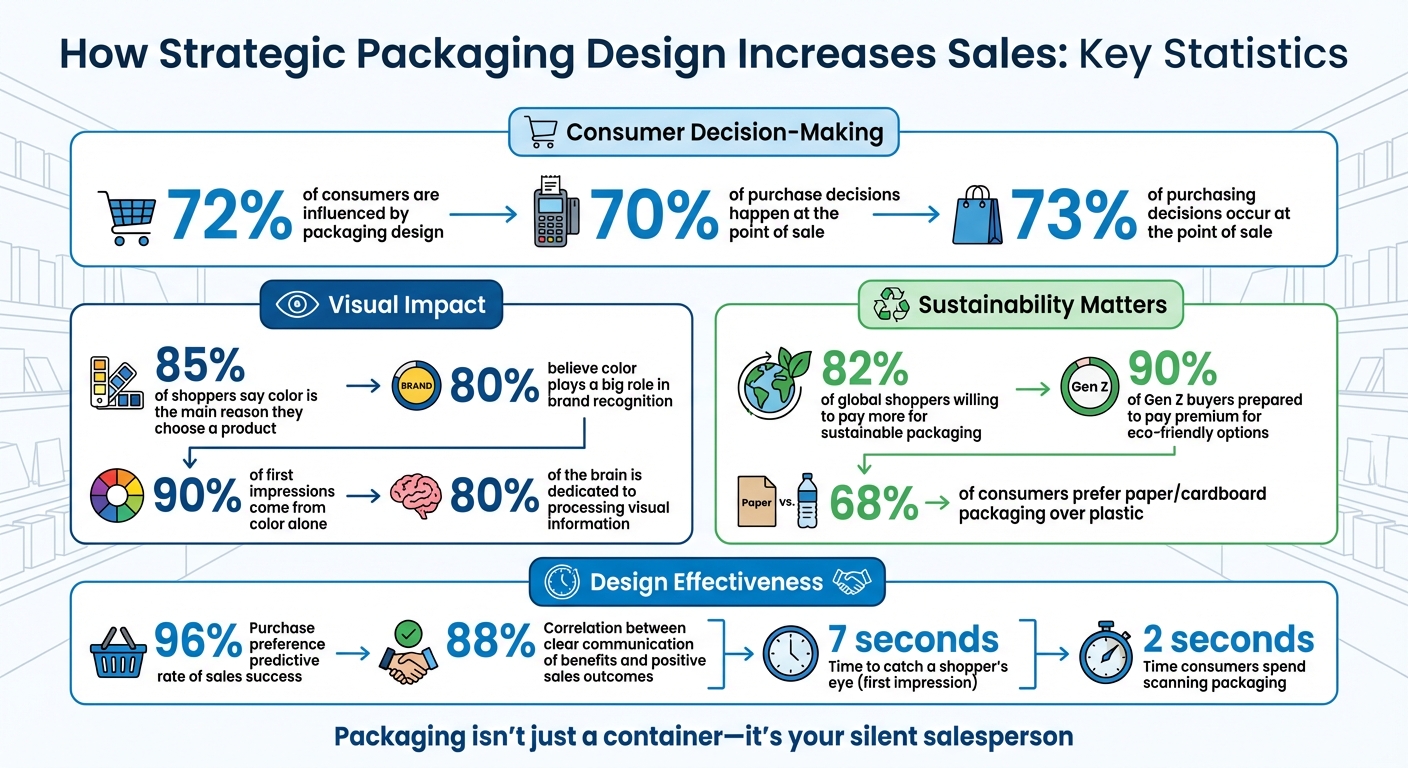
How Packaging Design Impacts Consumer Purchasing Decisions - Key Statistics
Match Packaging with Brand Identity and Consumer Needs
Your packaging is a powerful tool to connect with your audience and drive sales.
Let’s dive into how understanding your audience and reflecting your brand’s values through packaging can turn design into a sales driver.
Know Your Target Audience
To create packaging that resonates, you need to go beyond surface-level demographics and dig into what truly motivates your buyers. What drives their purchase decisions? What do they care about most when they pick up a product?
Research shows that packaging design plays a major role in consumer behavior. In fact, 72% of Americans say packaging design influences their purchasing decisions, while 67% consider the materials used when making a choice. Whether your audience prioritizes eco-friendliness, convenience, or a premium look, your packaging should reflect those values.
Take G Fuel as an example. By revamping its packaging to appeal directly to gamers, the brand shifted from niche status to a leader in the gaming energy drink market. The results? Annual sales soared to $350 million, and purchase intent jumped by 19 points.
The numbers back up the importance of design choices. Research shows that purchase preference is 96% predictive of sales success, while overall likability only correlates with sales gains 46% of the time. In other words, a well-targeted design can make or break your product’s success.
Reflect Your Brand Values in Packaging
Once you’ve nailed down your audience, your packaging needs to consistently communicate your brand’s identity. It’s about building recognition and trust through cohesive design elements like colors, typography, shapes, and messaging.
Consistency is key. When consumers see your product on a shelf or online, they should immediately recognize your brand. This familiarity reinforces their purchasing decisions.
But consistency isn’t just about visual appeal - it’s about meaningfully showcasing your brand’s values. For instance, if sustainability is at the core of your brand, use eco-friendly materials and make that choice clear. After all, 68% of consumers prefer paper or cardboard packaging over plastic. On the other hand, if innovation defines your brand, take a page from Hydroxycut’s playbook. The company updates its packaging with every product advancement, signaling progress and avoiding confusion with older designs.
Finally, focus on clarity. A strong value proposition should shine through without overwhelming the design. Overloading your packaging with too much information can dilute your message. Streamlining communication around top purchase-driving attributes has shown an 88% correlation with positive sales outcomes. In short, less is often more when it comes to making an impact.
sbb-itb-0c3a5ed
Stand Out on Retail Shelves
In a bustling retail space, you’ve got just 5-7 seconds to make an impression. That’s all the time your packaging has to grab attention and communicate value before a shopper moves on to the next option. With dozens of products competing for that fleeting glance, your design choices need to make your product impossible to overlook. This first connection paves the way for shoppers to dive deeper into your brand.
Use Color, Typography, and Graphics
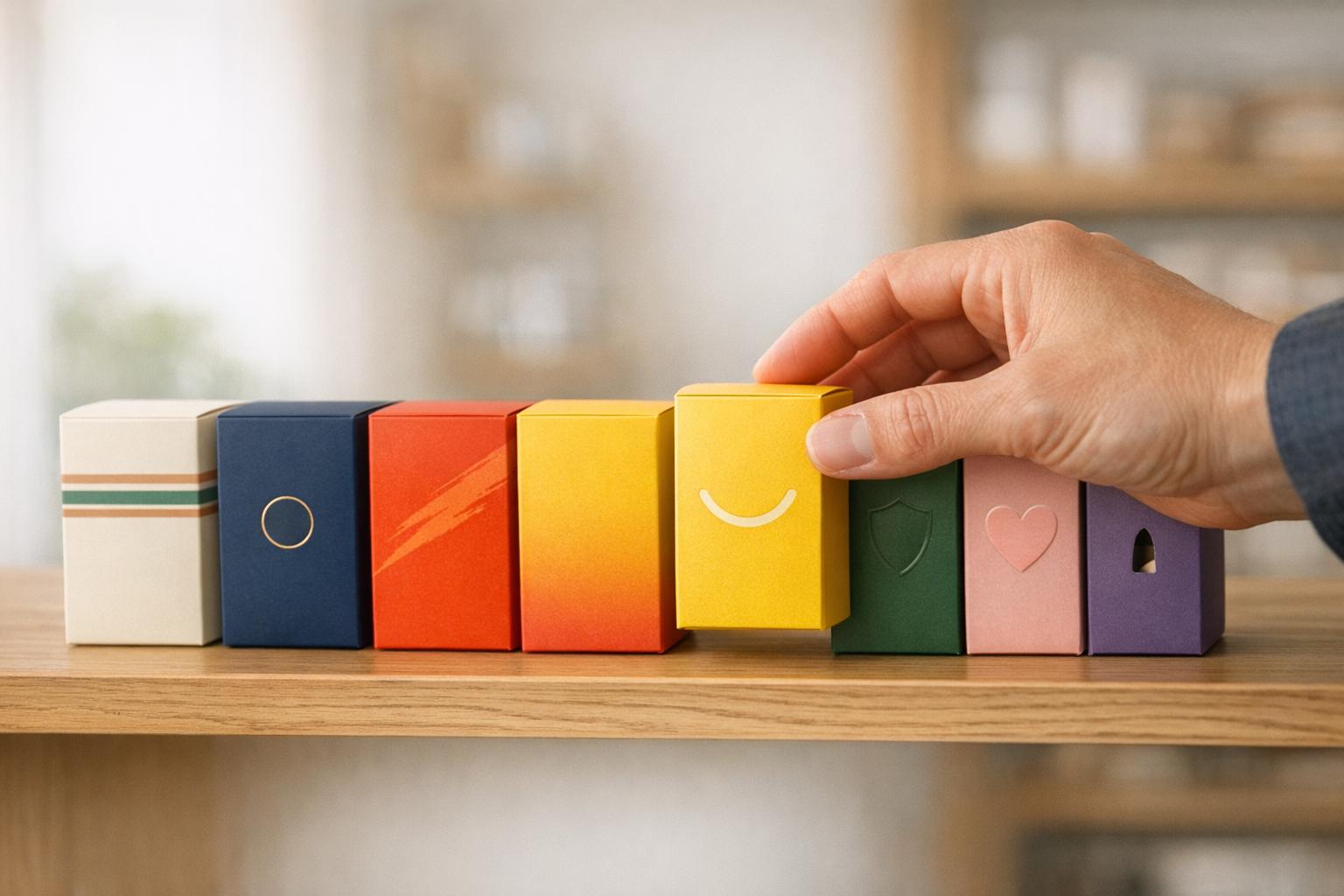
Color is your secret weapon. Did you know that 85% of shoppers say color is the main reason they choose a product? Even more, 80% believe it plays a big role in recognizing a brand. The most attention-grabbing colors? Red, yellow, green, and pink. To stand out, pick colors that contrast with what your competitors are using. For example, if everyone in your category uses blue, go bold with yellow or orange to create the “isolation effect,” making your product pop on the shelf.
Typography also speaks volumes about your brand. Script fonts can evoke elegance and sophistication, while sans-serif fonts feel clean and modern. Whatever is chosen, make sure it reflects your brand’s personality and is easy to read, whether it’s on a shelf or a smartphone screen.
Even shape plays a role. People are naturally drawn to curved designs because they trigger positive emotions, making them more inviting than sharp, angular shapes. Structural elements - like Burger King’s custom “Flame Sans” typography or uniquely shaped bottles - can make your product instantly recognizable and boost its shelf presence.
For functional products, clarity is king. Use visuals like realistic food imagery to create an immediate connection, and include straightforward claims like “lasts 12 hours” for personal care or over-the-counter products. Yucatan, for instance, revamped its packaging with clear messaging and a smart visual hierarchy, leading to a 34% jump in purchase preference.
And don’t just stop at the shelf. Think about how your packaging continues to represent your brand after the purchase.
Design a Memorable Unboxing Experience
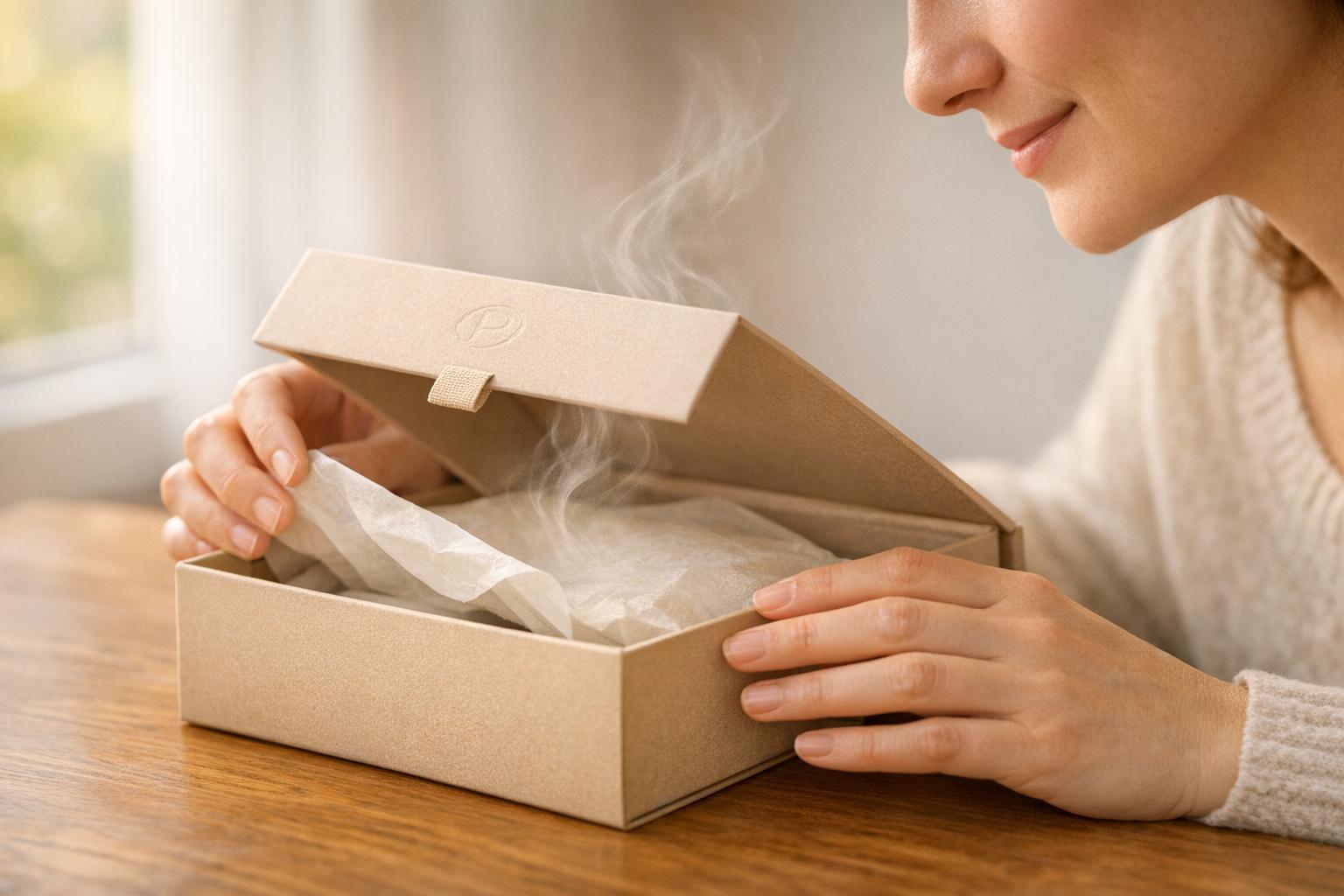
Packaging doesn’t stop working once the product is bought. The unboxing experience can leave a lasting impression, turning a simple purchase into a moment worth remembering. Details like custom typography, gift-like packaging, or tactile elements - such as smooth matte finishes or raised textures - can elevate this experience.
Touch matters more than you might think. The feel of your packaging can create a sense of ownership even before the product is used. Textures like silky gloss or soft-touch matte finishes don’t just feel great - they also encourage shoppers to follow through with their purchase.
Redesigning packaging with both shelf appeal and unboxing in mind can lead to real results. For example, Liquid I.V. saw a 29-point increase in purchase intent after revamping its packaging to better highlight product benefits and create a more engaging experience. Packaging updates have also led to a 32% boost in purchase intent among millennials, who value both aesthetics and functionality.
The trick is finding the right balance. Your packaging should grab attention in those critical first seconds and continue to reinforce your brand’s value every time a customer interacts with it.
Apply Consumer Psychology to Design Decisions
Packaging isn’t just about wrapping a product - it’s a tool that taps into how people think and feel. With 73% of purchasing decisions happening at the point of sale, every design choice you make has to resonate emotionally with shoppers. The goal? Trigger an instant connection through visual and tactile cues.
"Packaging serves as the silent salesman – its design, color, and material all convey messages that affect consumer perception and brand identity." - Praxis Packaging
This quote highlights a crucial truth: packaging isn’t just functional; it’s persuasive. With 80% of the brain dedicated to processing visual information, everything from layout to texture influences how people perceive your product. Nail these details, and you can turn a casual glance into a purchase.
Use Visual Hierarchy
Consumers spend just two seconds scanning packaging. That means your design has to direct their attention quickly and effectively. Eye-tracking research shows a clear pattern: shoppers look at the product name first, then the image or graphic, and finally any claims or benefits.
In Western markets, the upper-left corner gets the most attention, making it the ideal spot for your brand name or a key selling point. Use font size, weight, and style to guide their eyes naturally. For example, bold typography can highlight details like "lasts 12 hours" or "100% organic", ensuring they stand out.
Colors also play a huge role in grabbing attention. Since 90% of first impressions come from color alone, your color palette needs to work hard. Warm tones like red and orange are perfect for indulgent foods - they spark appetite and urgency. On the other hand, cool shades like blue and green suggest health and sustainability, making them ideal for wellness products. If your product sits on a higher or lower shelf, use bold design elements to draw the eye, compensating for its placement.
While visual hierarchy grabs attention, the materials you choose can seal the deal.
Choose Materials and Textures That Connect
Packaging isn’t just about looks - it’s about feel, too. The texture and material of your packaging leave a lasting impression. In fact, shoppers often transfer their feelings about the packaging to the product itself. If the packaging feels cheap, they’ll assume the product is, too. But if it feels sturdy and premium, they’ll associate it with quality.
"Consumers often transfer their feelings about packaging onto the product itself." - Louis Cheskin
Different materials send different messages. Glass feels luxurious and pure, making it a go-to for high-end cosmetics and beverages. Metal packaging, like aluminum, suggests strength and modernity, which is why it’s popular with craft beverage brands and premium skincare lines. For eco-conscious buyers, kraft paper and textured materials evoke authenticity and a connection to nature.
Adding tactile elements - like matte finishes, raised textures, or metallic accents - does more than look good. These details communicate quality and craftsmanship, justifying higher price points and building trust. Functional features, like resealable lids or easy-pour spouts, add convenience, creating a positive emotional connection.
The materials you use should align with your product’s message. Packaging a premium item in flimsy plastic can undermine your brand’s credibility. On the flip side, using heavy, textured materials for a budget product might send the wrong signal and push it out of your target market. The key is matching the material to the story you want your product to tell.
Design Functional Packaging That Builds Loyalty
Eye-catching packaging grabs attention, but it’s the functionality that keeps customers coming back. While visuals spark curiosity, a well-thought-out design builds trust and encourages repeat purchases. With 54% of global consumers stating they buy from brands they trust completely, every detail of your packaging plays a role in shaping that trust.
Great packaging has to do more than look good. It needs to protect, contain, transport, dispense, store, and stand out - all while making life easier for the customer. When packaging fails in any of these areas, it risks damaging your brand’s reputation. But when it succeeds, it becomes a quiet yet powerful tool that fosters loyalty and repeat business.
"The measure of success for packaging design lies in its ability to effectively communicate, resonate with the target audience, and drive consumer actions." - Meyers
Balance Looks with Usability
A stunning design might catch a shopper’s eye, but if the packaging is hard to open or inconvenient to use, it could drive them away. Features like easy-pour spouts, resealable zippers, and secure closures can make a big difference. For example, a resealable zipper keeps snacks fresh, while a snap lid prevents messy spills - small details that enhance convenience and leave a positive impression.
Durability is another cornerstone of functional packaging. It must endure drops, temperature shifts, and moisture during shipping and storage. This is particularly important for eCommerce brands, where packaging not only has to survive transit but also deliver a memorable unboxing experience that’s worth sharing on social media.
Striking the right balance between creativity and practicality is key. While unique shapes can help your product stand out, they also need to be stackable, easy to ship, and shelf-friendly. If a design collapses during transport or wastes space, it compromises functionality and customer satisfaction. By addressing these practical concerns, you create a seamless experience for your customers.
Add Value with Eco-Friendly Packaging
Sustainability isn’t just a trend - it’s a priority for today’s consumers. 82% of global shoppers are willing to pay more for products with sustainable packaging, and 90% of Gen Z buyers are prepared to pay a premium for eco-friendly options. When your packaging reflects these values, it does more than reduce waste; it strengthens your connection with customers.
Eco-friendly packaging offers a dual benefit: minimizing environmental impact while enhancing customer loyalty. Materials like kraft paper or cardboard add a premium feel, with their natural textures and earthy aromas creating a sensory-rich unboxing experience. Reusable options, such as glass jars that can be repurposed for storage, keep your brand in customers’ homes long after the product is used.
However, sustainability should never come at the expense of protection. If eco-friendly materials fail to safeguard the product, you risk returns and dissatisfied customers. The solution lies in right-sizing your packaging to reduce waste and shipping costs while ensuring durability. Clear messaging - such as recycling instructions or sustainability certifications - on the packaging can further build trust and encourage customers to share their positive experiences with others.
Use PKG Brand Design's Consumer First® Approach
Designing packaging that truly sells isn’t about relying on hunches - it’s about following a clear, structured process. PKG Brand Design’s Consumer First® strategy puts shoppers front and center in every design decision. The guiding principle? "Everything starts with the consumer. That's our only rule."
By focusing on the shopper’s perspective, this approach bridges the gap between eye-catching shelf appeal and long-term customer loyalty.
How the Consumer First® Approach Works
The process kicks off with retail immersion, where the team captures in-store photos across different retail environments. This is followed by a thorough brand audit, analyzing visual assets, storytelling, and competitive benchmarks.
The methodology aligns with Nielsen's BASES framework, emphasizing three key areas: Catch Attention, Connect Message, and Communicate Clearly. These focus points are backed by data, targeting metrics like purchase preference (96% predictive of sales) and communication of key attributes (88% predictive).
Examples of Successful Designs
The impact of this approach is evident in real-world results. For instance, Hillshire Brands modernized their packaging using the Consumer First® methodology while retaining their leadership in the market. Their Design/Packaging Director noted, "The final design had great success in the marketplace really moving the needle on our brand's modernity and helping maintain its leadership in the category."
Other brands, such as Harkins Popcorn and Columbia Frozen Fruit, have also benefited from this consumer-focused process. By involving shoppers at every stage - from observing retail dynamics to refining the final design - these brands have created packaging that not only stands out on shelves but also drives sales. When the consumer’s voice leads the way, packaging becomes more than just a container - it becomes a compelling story that resonates with buyers.
Key Takeaways
Effective packaging design is more than just aesthetics - it's a blend of strategy, psychology, and usability that works together to influence consumer behavior. Think of packaging as your silent salesperson, quietly persuading shoppers to choose your product over others on the shelf. At the core of every successful design is a consumer-first mindset, ensuring each decision resonates with the target audience.
To create packaging that drives sales, align it with your brand identity and make it pop with thoughtful use of color, typography, and graphics. Consumer psychology plays a big role here - visual hierarchy helps shoppers quickly find the most important details, while textures and materials can evoke emotional connections. But remember, even the most eye-catching design falls flat if the packaging isn’t functional. Striking the right balance between form and usability is what keeps customers loyal.
The numbers back this up: purchase preference is 96% predictive of in-market sales success, and clearly communicating key attributes can lead to an 88% boost in sales outcomes. Brands that excel in packaging design often rely on structured, consumer-focused methods - like PKG Brand Design's Consumer First® approach - to ensure every choice is backed by real shopper insights.
Next Steps for Your Brand
Now’s the time to assess your packaging. Does it clearly highlight the features that matter most to buyers? Does it stand out in a crowded marketplace? And does it leave a lasting impression through a memorable unboxing experience?
If you’re ready to elevate your packaging strategy, consider exploring PKG Brand Design’s services. Their packages start at $5,000 for single-product designs, while the $20,000 Premium package includes advanced tools like consumer eye tracking and in-depth consumer research studies. These data-driven insights can help you make informed design decisions with confidence. When packaging is treated as a strategic asset rather than an afterthought, it becomes a powerful tool that turns casual browsers into loyal customers.
FAQs
How does packaging design impact consumer emotions and buying decisions?
Packaging design holds a significant influence over how consumers feel and the choices they make. Elements such as color, texture, and shape can stir emotions like trust, excitement, or a sense of value - factors that directly affect purchasing decisions. For instance, bold, vibrant colors can immediately catch the eye, while soft, smooth textures might convey an air of luxury and sophistication.
Great packaging also boosts shelf appeal, making products pop in busy retail environments and leaving a lasting impression. Features like clear, easy-to-read labeling and high-quality finishes signal reliability and excellence, strengthening the emotional bond between the consumer and the brand. When packaging aligns with consumer psychology, it doesn’t just draw attention - it builds trust, inspires confidence, and encourages loyalty, ultimately driving both initial sales and repeat purchases.
What should I focus on to ensure my packaging reflects my brand identity?
When designing packaging that truly embodies your brand identity, aim for a look that mirrors your brand's values, personality, and unique place in the market. Stick to consistent colors, fonts, and visuals that tie into your brand story and connect with your audience. This consistency helps your brand stand out and builds trust over time.
Your packaging should also make it easy for customers to understand the product's benefits and what makes it special. Highlight the key features in a way that speaks directly to what your customers care about, while keeping your brand's tone and voice intact. A design that aligns with your brand not only grabs attention on the shelf but also strengthens customer loyalty by offering a smooth and memorable experience.
Why do modern consumers care about sustainable packaging?
Modern shoppers are placing more importance on sustainable packaging, driven by their concern for environmental issues like plastic waste, pollution, and dwindling natural resources. Many actively seek out brands that demonstrate responsibility by using environmentally conscious materials, such as recycled or biodegradable options.
Opting for sustainable packaging does more than just minimize environmental harm - it also helps brands resonate with consumers who value ethical practices. This connection can boost brand loyalty and influence buying decisions, as more people choose products that align with their personal values.