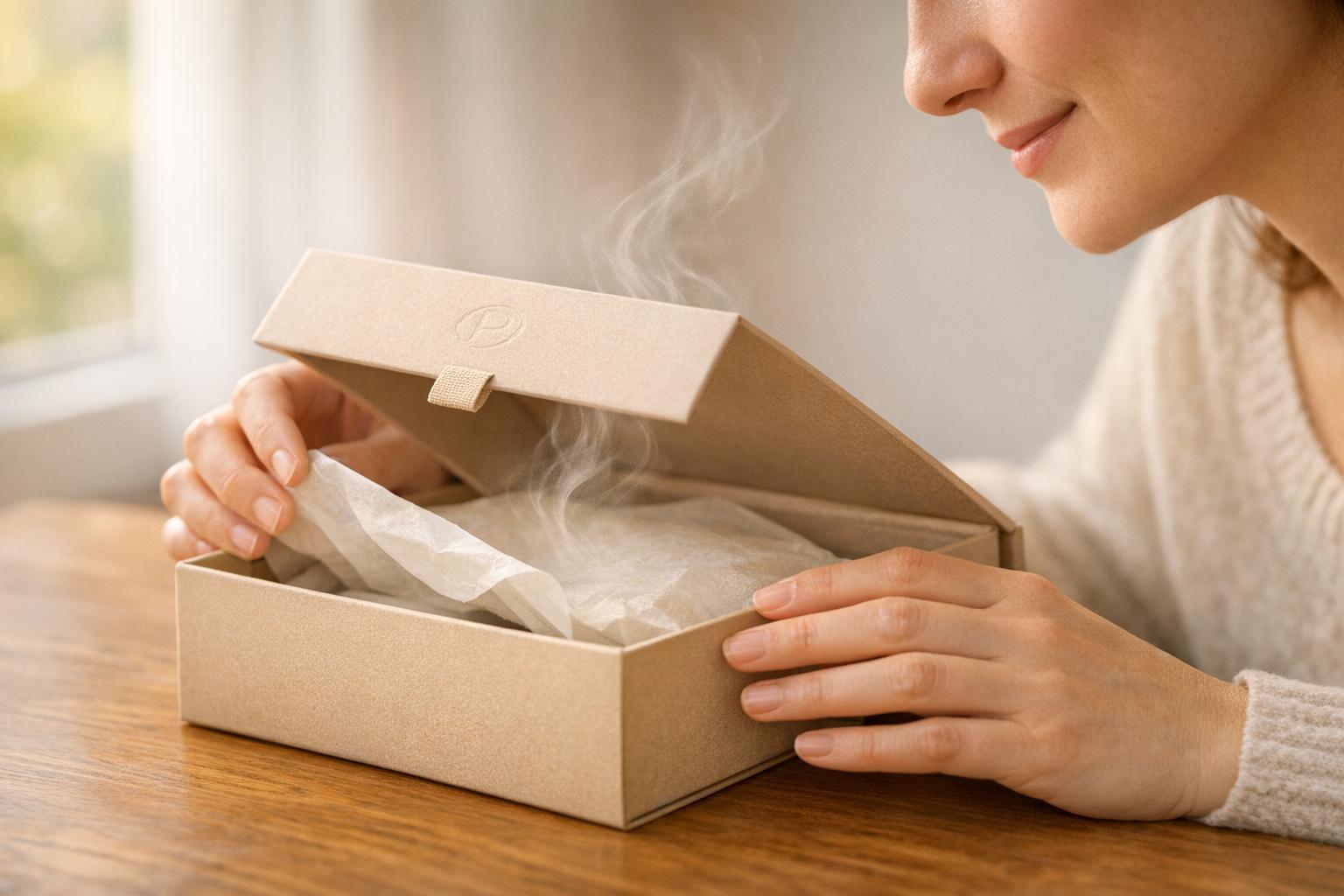

Can luxury packaging be both elegant and eco-friendly? Yes, and brands are proving it.
In 2026, luxury brands are rethinking packaging to meet growing consumer demands for sophistication without waste. The challenge? Maintaining the premium feel of materials like glass, embossed paper, and magnetic closures while reducing environmental harm.
Key takeaways:
- Consumer demands are shifting: 74% of buyers are willing to pay more for eco-friendly packaging.
- Sustainability drives sales: Half of industry leaders predict eco-conscious packaging will account for 30%+ of sales by 2028.
- Innovative materials are emerging: Mycelium, bamboo, and advanced treated papers replace traditional plastics and heavy glass.
- Cost and weight matter: Lighter, recyclable designs reduce shipping emissions and costs.
Brands like Burberry and Gucci are leading the way by ditching plastics and adopting recyclable materials. The future of luxury packaging lies in balancing aesthetics with responsibility - without compromising the unboxing experience.
1. Traditional Luxury Packaging Materials
Luxury packaging has traditionally leaned on materials like virgin plastics, heavy glass, metals, wood, leather, and foam or plastic inserts. These materials were favored for their ability to provide a rich sensory experience - the weight of a glass perfume bottle, the polished shine of custom finishes, or the satisfying click of a magnetic closure. Together, they conveyed a sense of exclusivity and prestige, often through intricate designs and glossy surfaces.
Material Aesthetics
What sets traditional luxury materials apart is their ability to create a tactile and visual experience that screams sophistication. For example, heavy glass bottles offer a sturdy, premium feel often associated with high-end fragrances and spirits. Similarly, packaging that combines materials - like laminated boxes with leather details - adds layers of texture, reinforcing a sense of exclusivity. Decorative touches such as foil stamping, embossing, and soft-touch coatings further elevate this perception, making the product feel more valuable and trustworthy.
"Luxury packaging is about creating a sensory experience that aligns with the premium nature of the brand."
– Allan Quimby, Head of Marketing at KURZ
But while these features enhance the luxury appeal, they also come with a hefty environmental price tag.
Environmental Impact
Despite their appeal, these materials pose significant environmental challenges. Luxury brands are the fourth largest contributors to plastic packaging waste globally. Multi-material designs - like boxes with metal closures or magnets - are notoriously hard to recycle because separating the components is nearly impossible. Plastics can linger in the environment for centuries, and the weight of heavy glass increases carbon emissions during shipping. Additionally, decorative inks and coatings often release VOCs (volatile organic compounds), which not only complicate recycling but also harm the environment. Components like magnets and zippers further disrupt recycling systems.
Cost Efficiency
The choice of materials also impacts production costs. Premium options like heavy-duty cardboard, silk, exotic woods, and metallic accents require significant resources and energy to produce. Many luxury packages are handcrafted or need specialized machinery, driving up costs even more. On top of that, luxury packaging designs are often bulky and delicate, making them harder to store and ship. This increases warehousing and shipping expenses and raises the risk of damage during transit. It's no surprise that 43% of luxury packaging executives now focus on reducing volume and weight to make supply chains more sustainable.
Consumer Perception
Consumer expectations around packaging are shifting. While opulent packaging once symbolized authenticity and quality, today's buyers are leaning toward sustainability. A whopping 74% of consumers are willing to pay extra for eco-friendly packaging, with nearly 25% ready to spend at least 10% more. Over-the-top traditional designs are increasingly seen as wasteful, potentially damaging a brand's image among environmentally conscious shoppers. Brands are taking note, with many recognizing that recyclable and sustainable packaging will shape the future of the luxury market.
"As the demand for sustainability grows, luxury brands face the challenge of balancing elegance with environmental responsibility."
– Kevin Keating, President, PKG Brand Design
sbb-itb-0c3a5ed
2. Eco-Friendly Luxury Packaging Materials
Luxury brands are showing that sustainability can go hand in hand with sophistication. Instead of sticking to traditional materials like virgin plastics or heavy glass, they're opting for alternatives that are both elegant and environmentally conscious. From advanced paper to bio-based materials, these innovations are redefining luxury packaging.
Material Aesthetics
One standout in this shift is advanced paper and fiberboard, regarded by 49% of industry experts as the material with the most promise. These aren't your standard cardboard boxes - modern treated papers now offer durability and moisture resistance comparable to plastic, all while maintaining a high-end appearance. Meanwhile, bio-based materials like mycelium, seaweed films, bamboo, bagasse, and grape skin bring natural textures that elevate a brand's narrative. These materials provide an organic, exclusive feel, turning packaging into a memorable aspect of the product.
"Packaging becomes a powerful cultural symbol - beauty that reflects values, and innovation that embraces sustainability."
– Marco Nespolo, CEO, Fedrigoni Group
This focus on advanced materials not only enhances the aesthetic appeal but also sets the stage for broader environmental progress.
Environmental Impact
Switching to eco-friendly materials is transforming the luxury packaging industry. Brands are moving away from excess and embracing the Four Rs: Reduce, Reuse, Recycle, and Recover. Materials like advanced papers, mycelium, and biodegradable polymers are replacing traditional plastics and foams. Lightweighting - using thinner materials and smaller packages - is another game changer, cutting carbon emissions during transportation.
To measure these efforts, brands are turning to Life Cycle Analysis (LCA), which tracks impacts like carbon emissions, energy use, and recyclability. Tools like the Digital Product Passport (DPP) are also gaining traction, offering consumers clear insights into a product's lifecycle. Gucci was ahead of the curve, introducing 100% recyclable packaging with FSC Certified paper in 2010 and later adopting water-based inks to minimize VOC emissions. By 2025, Burberry had eliminated all plastic from its customer packaging, opting for fully recyclable designs by removing components like zippers and metal studs.
The trend is undeniable: 50% of luxury packaging leaders predict that sustainable solutions will account for over 30% of industry sales by 2028.
Cost Efficiency
These innovations aren't just about aesthetics or environmental benefits - they also impact costs. Reducing packaging volume and weight, a top priority for 43% of executives, helps maximize transport efficiency and reduce shipping expenses. Lighter materials mean fewer trips and lower fuel consumption, leading to tangible savings.
That said, there are upfront challenges. Eco-friendly packaging often requires specialized equipment or expertise, which can drive up initial costs. The solution lies in early collaboration with packaging manufacturers to co-create cost-effective designs that retain a premium feel. Technologies like Scodix, which uses 80% less water than traditional foil stamping, show how innovation can cut both environmental and operational costs.
With Extended Producer Responsibility (EPR) regulations now in place, brands are financially accountable for the environmental impact of their packaging. This makes sustainable design not just an ethical choice but also a financial imperative.
Consumer Perception
For today’s luxury consumers, sustainability isn't a compromise - it’s an expectation. They want to know where products come from, how they’re made, and what happens to them after use. Packaging plays a key role in telling that story.
"For today's luxury consumer, knowledge is part of the reward. They want to know where something came from, how it was made, and what happens to it next. Packaging is now the portal to that story."
– Claudia D'Arpizio, Senior Partner, Bain & Company
Brands are responding by embedding QR codes and Augmented Reality (AR) features into packaging, transforming minimalist designs into interactive experiences. These tools verify authenticity, offer supply chain transparency, and even enhance the resale value of luxury goods. In 2025, Zwiesel Glas introduced sustainable luxury containerboard packaging for its handmade glassware, creating a memorable unboxing experience while strengthening the emotional bond with consumers.
The appeal of eco-luxury is evident, as premium food and beverage launches saw an annual growth rate of 7% between 2020 and 2025. However, by 2026, consumers had grown more skeptical of vague eco-claims. Certifications like FSC and digital transparency became essential for maintaining trust.
Pros and Cons
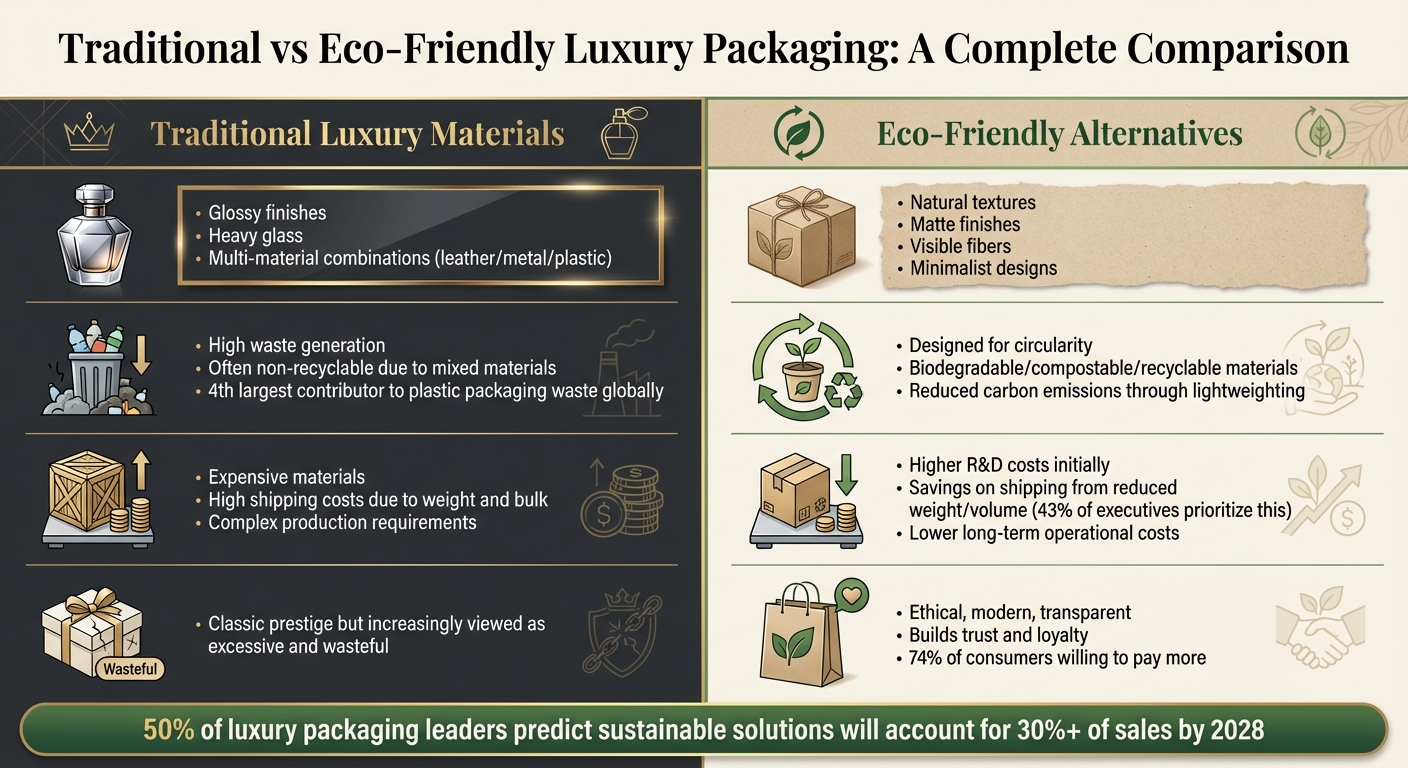
Traditional vs Eco-Friendly Luxury Packaging Materials Comparison
Luxury packaging, whether leaning toward traditional opulence or eco-conscious innovation, comes with trade-offs that brands must weigh carefully to meet both their values and their customers' expectations.
Traditional luxury packaging is all about making a bold, immediate impression. Think glossy foils, heavy glass, and intricate combinations of leather, metal, and plastic. These designs scream prestige but often come with hidden downsides - higher shipping costs due to their bulk and weight, and a growing perception of being wasteful rather than luxurious.
Eco-friendly packaging flips the script by focusing on understated elegance. Materials like bamboo, cork, and recycled paper bring a natural, earthy vibe. They’re often biodegradable, recyclable, or even compostable, which lowers environmental impact while also cutting transportation costs thanks to their lighter weight . However, there’s a catch: upfront costs for research and development can be steep, especially for newer materials like bioplastics. These trade-offs ripple across key areas like design, sustainability, cost, and consumer attitudes.
And speaking of consumers, their preferences are evolving fast. While traditional packaging once symbolized exclusivity, today 74% of consumers say they’re willing to pay extra for sustainable packaging. Nearly a quarter of them are fine with paying 10% or more over standard costs. Eco-conscious luxury packaging is increasingly linked to qualities like ethics, innovation, and honesty - qualities that help build long-term loyalty.
Here’s a quick breakdown of how traditional and eco-friendly luxury packaging stack up:
| Feature | Traditional Luxury Materials | Eco-Friendly Alternatives |
|---|---|---|
| Material Aesthetics | Glossy finishes, heavy glass, multi-material (leather/metal/plastic) | Natural textures, matte finishes, visible fibers, minimalist designs |
| Environmental Impact | High waste; often non-recyclable due to mixed materials | Designed for circularity; biodegradable, compostable, or easy to recycle |
| Cost Efficiency | Expensive materials and shipping due to weight and complexity | Higher R&D costs but savings on shipping from reduced weight/volume |
| Consumer Perception | Seen as classic but increasingly viewed as excessive or wasteful | Seen as ethical, modern, and transparent; builds trust and loyalty |
Balancing tradition with sustainability is no small feat, but it’s clear that consumer expectations are shifting toward greener solutions.
Design Techniques for Eco-Luxury Packaging
Luxury brands are finding ways to merge indulgence with eco-consciousness, and these design techniques offer practical steps toward achieving that balance. A key strategy is embracing minimalistic design, which emphasizes the natural beauty of sustainable materials. By using clean lines and reducing embellishments, brands can let textures like bamboo grain or recycled paper variations take center stage. For example, matte finishes on uncoated, FSC-certified papers provide a premium look and feel while remaining fully recyclable - an advantage over laminated alternatives.
One standout method is mono-material solutions, which simplify materials without sacrificing aesthetics. A great example comes from Hunter Luxury's collaboration with skincare brand Espa in late 2025. Together, they created a 25-drawer advent calendar for a holiday collection of 15,000 units. Instead of traditional magnets and ribbons, the design team used engineered paper flaps and tucks, stacked corrugate in place of plastic inserts, and applied lamination to just one side of the inserts. This all-paper approach not only maintained a luxurious appearance but also ensured the packaging was fully recyclable.
Another innovative direction is the rise of refillable designs, which transform packaging into long-lasting, cherished items. Drop-in cartridge systems, often seen as the height of luxury, feature permanent outer cases with replaceable inserts. This approach turns refilling into a sophisticated ritual. Additionally, digital embellishment technologies like Scodix offer tactile luxury while using 80% less water compared to traditional foil stamping. These techniques align with broader goals to reduce waste and volume, as highlighted by industry leaders.
Consumer feedback plays a vital role in shaping these sustainable designs. PKG Brand Design's Consumer First® approach integrates real consumer insights to ensure that eco-friendly choices resonate with buyers. With production accounting for 92% of a product's environmental impact, designers are increasingly focused on selecting the right materials.
"Packaging is evolving from a static container into a dynamic brand touchpoint. It's no longer about choosing between beauty and responsibility. Today, you can - and must - deliver both." – Claudia D'Arpizio, Senior Partner, Bain & Company
Digital tools further enhance the eco-luxury experience by making sustainability transparent. QR codes and NFC labels allow brands to share material sourcing and carbon footprint data while eliminating the need for paper leaflets. With half of luxury packaging leaders predicting that sustainable solutions will drive over 30% of sales within three years, integrating consumer-focused, eco-friendly innovations is no longer optional - it’s essential for staying competitive in this evolving market.
Conclusion
Luxury packaging no longer demands a trade-off between sophistication and responsibility. Brands can achieve both by carefully selecting materials and embracing inventive designs. The move toward mono-material solutions, advanced paper options, and digital integration highlights how eco-friendly choices can elevate a product's premium image. In fact, half of industry leaders anticipate that sustainable packaging will account for over 30% of sales by 2028, signaling a growing market demand and a clear competitive edge.
The road ahead requires actionable steps. Priorities include eliminating non-recyclable materials, reducing packaging weight and size to lower transport emissions, and adopting Digital Product Passports for enhanced transparency. These measures transform packaging from waste into a powerful storytelling tool that reflects a brand's commitment to sustainability.
Brands like Burberry have pledged to eliminate all plastic from their customer packaging by 2025, while Sektkellerei OHLIG's "RE:INCARNATED SPIRITS" collection features 100% circular packaging. Their designs use innovative materials like labels made from 15% grape waste and padding crafted from shredded Euro banknotes, proving that eco-conscious choices can still deliver keepsake-worthy quality.
To stay ahead, brands should embrace the Four Rs - Reduce, Reuse, Recycle, Recover - and explore alternatives such as protective fiber inserts in place of plastic. Water-efficient embellishment technologies like Scodix, which uses 80% less water than traditional methods, further enhance sustainability efforts. PKG Brand Design's Consumer First® approach emphasizes the importance of aligning sustainable solutions with consumer insights, ensuring these choices resonate with buyers.
The landscape of luxury packaging has transformed. Modern consumers demand responsibility and transparency without compromising on aesthetics. By aligning material choices with these expectations, brands can maintain their luxury appeal while demonstrating environmental responsibility. Every decision about materials becomes an opportunity to tell a meaningful story. In a world where sustainability is no longer optional, this balance of elegance and eco-awareness sets the stage for long-term success.
FAQs
How can eco-friendly packaging still feel luxurious?
Eco-friendly packaging can deliver a sense of luxury when sustainable materials are paired with refined design details. Think embossed textures, sleek finishes, and clean, minimalist aesthetics. Incorporating materials like FSC-certified paper, bamboo, or plant-based alternatives not only elevates the packaging’s appeal but also aligns with environmentally conscious values. Adding thoughtful elements, such as reusable designs or eliminating unnecessary components, reinforces the premium experience. This shows that sustainability and sophistication can go hand in hand.
What materials can replace plastic inserts and heavy glass?
Eco-friendly packaging materials are stepping up as alternatives to traditional plastic inserts and heavy glass. Options like mushroom (mycelium) packaging, biodegradable bioplastics, bamboo, and seaweed-based packaging are making waves. These materials not only reduce environmental impact but also deliver on both functionality and visual appeal.
How do brands prove sustainability claims without greenwashing?
Brands can steer clear of greenwashing by prioritizing transparency, accuracy, and independent verification when sharing their sustainability initiatives. This means offering clear, measurable data - like specific reductions in material usage or carbon emissions - and supporting these claims with recognized certifications or third-party audits. By adhering to regulations and sharing only verified facts, companies can build trust and demonstrate responsibility. This approach is especially important in the luxury market, where consumers demand both accountability and openness.