---
title: Packaging Emotional Triggers for Sales
description: Seven emotional triggers—nostalgia, trust, excitement, joy, security, love, curiosity—used in packaging to boost purchases and loyalty.
image: https://assets.seobotai.com/cdn-cgi/image/quality=75,w=1536,h=1024/pkgbranding.com/699d6a34efc60cc2af09912c-1771927424595.jpg
---
[ ](https://www.pkgbranding.com/)
[ ](https://www.hangar-12.com/)
[312.870.9101](tel:+1.312.870.9101)
# Consumer First Insights
## 7 Emotional Triggers That Drive Packaging Success
Written by Kevin Keating at PKG
Packaging influences buying decisions in seconds, driven by emotions rather than logic. Around **95% of consumer thinking happens unconsciously**, and **72% of Americans** say packaging impacts their choices. Emotional connections - like nostalgia, trust, and joy - can make a product stand out, but **89% of consumers feel little emotional connection to brands**. This gap offers an opportunity for businesses to design packaging that resonates emotionally.
Here are the **7 emotional triggers** that can transform packaging into a sales driver:
- **Nostalgia**: Retro designs and tactile materials evoke comforting memories.
- **Trust**: Clear labels, secure seals, and reliable materials build confidence.
- **Excitement**: Bold colors, unique shapes, and textures grab attention.
- **Joy**: Bright colors, playful designs, and satisfying tactile elements create happiness.
- **Security**: Tamper-proof features and durable materials reassure buyers.
- **Love**: Premium finishes and iconic designs foster emotional bonds.
- **Curiosity**: Unusual shapes, die-cuts, and interactive features spark interest.
Brands can use these triggers to connect with consumers on a deeper level, influencing purchases and loyalty. For example, [Cadbury](https://www.cadbury.co.uk/)’s retro packaging or Tiffany’s iconic blue box demonstrates how design can evoke strong emotional responses. By focusing on these elements, businesses can turn packaging into a powerful tool that drives sales.
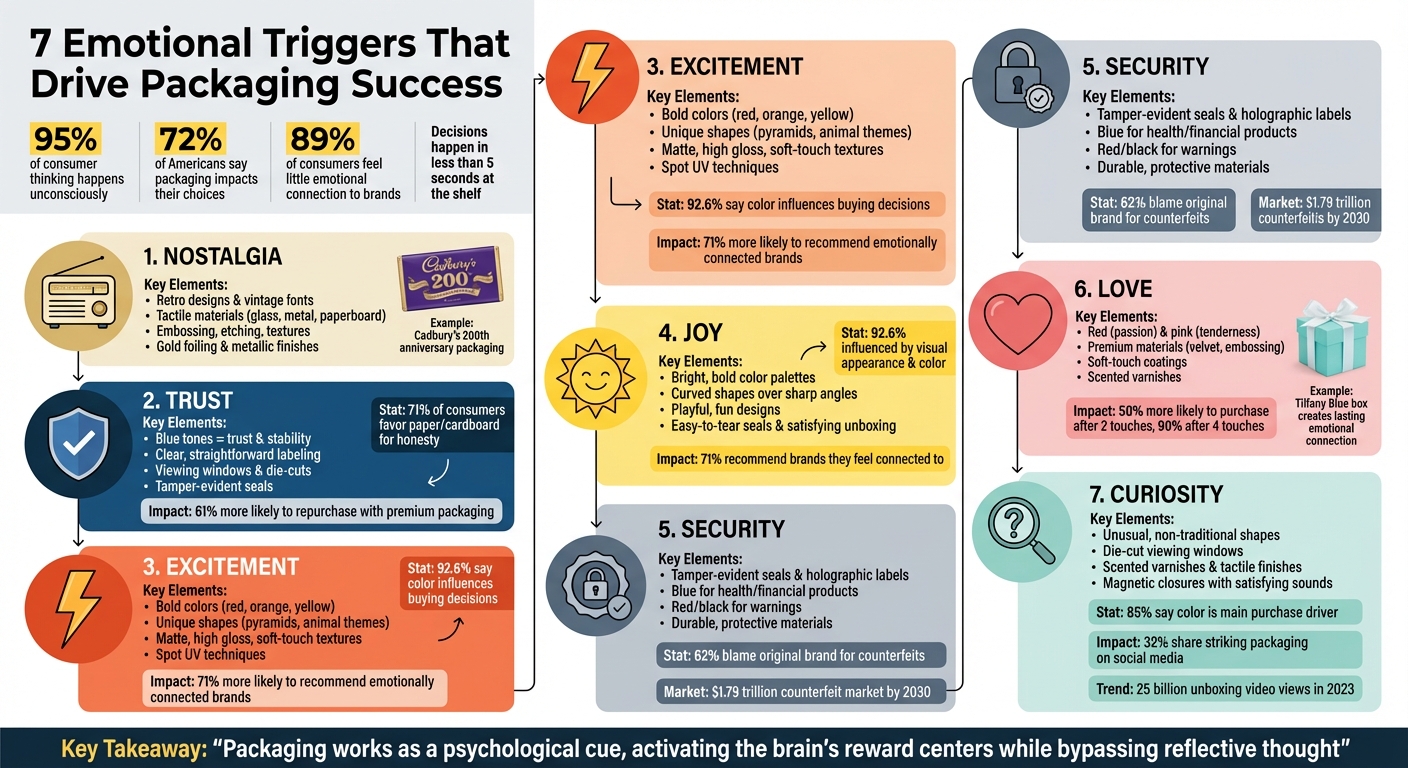
7 Emotional Triggers That Drive Packaging Success
## 1. Nostalgia
### Emotional connection with consumers
Nostalgia taps into positive memories, creating a sense of comfort and familiarity. This emotional pull can make brands more memorable and encourage repeat purchases. Interestingly, it also resonates with younger audiences through a phenomenon called "anemoia", where they feel a longing for a past they never experienced. These consumers are drawn to retro designs featuring vintage fonts and classic color schemes.
"In uncertain times, consumers gravitate toward nostalgic packaging that reinforces brand heritage."
– Ela Veresiu, Assistant Professor of Marketing, [York University](https://www.yorku.ca/)
A great example of nostalgia in action: Cadbury marked its 200th anniversary in early 2024 by reintroducing six historical packaging designs for its Dairy Milk products. These designs, spanning from 1915 to today, gave shoppers a tangible link to the brand's rich history. Similarly, companies like [Pepsi](https://www.pepsi.com/en-us/) and [Burger King](https://www.bk.com/) have modernized their classic logos in recent rebrands, leaning into their heritage to connect with consumers.
### Visual and tactile design elements
Nostalgic packaging often relies on thoughtful choices in both materials and design. Swapping plastic for materials like glass bottles, metal cans, or paperboard cartons instantly evokes a sense of the past. Additions like embossing, etching, or rough textures on packaging create a premium feel that consumers subconsciously associate with the product itself. For example, Bawls Guarana uses textured "foaming ink" on its 16-oz. cans, adding a tactile element that reinforces its nostalgic design.
Design details like gold foiling or metallic-effect finishes mimic the hand-painted signage of earlier times, adding a touch of elegance. Even sound plays a role - think of the satisfying "whoosh" of a steel can opening. One brand experienced a decline in market share after replacing this sound with a silent composite container. For higher-end products, using earthy, muted colors instead of bright tones can evoke a sense of tradition and craftsmanship. These elements don’t just trigger memories - they directly influence purchase decisions.
### Impact on consumer purchasing behavior
Details like embossing and textured finishes do more than just look good; they invite physical interaction, which can drive purchases. This concept, known as "sensation transference", means that the quality consumers perceive in the packaging often extends to the product itself. Adding a brief history or story about the brand on the packaging can further deepen the emotional connection, creating an edge over more generic designs.
###### sbb-itb-0c3a5ed
## 2. Trust
### Emotional Connection with Consumers
When it comes to snap decisions, shoppers often rely on a package's ability to convey reliability and honesty. For instance, blue tones are commonly associated with trust and stability, while green evokes feelings of health, safety, and environmental care. These subtle visual cues influence choices on a subconscious level.
"Trust is the currency of long-term brand loyalty in the consumer packaged goods industry."
– Taylor
Clear, straightforward labeling - emphasizing ingredients, sourcing, or certifications - helps establish credibility. On the flip side, overly complicated or unclear labels can make buyers hesitate. Keeping information simple and easy to understand instills confidence in the product and the brand.
### Visual and Tactile Design Elements
Features like viewing windows or die-cuts that reveal the actual product are highly effective for building trust. They offer tangible proof that "what you see is what you get", reducing doubts about quality or freshness. Functional elements such as tamper-evident seals, expiration dates, and easy-to-open designs also play a key role in reassuring consumers. Even small details, like the sound of a vacuum seal or the click of a secure closure, can enhance feelings of safety and reliability.
Material selection also speaks volumes. For example, 71% of consumers favor paper or cardboard due to its association with honesty and eco-friendliness. High-quality materials and finishes, such as soft-touch textures, convey durability and premium value, while also providing a tactile experience that reinforces the perception of quality.
These design choices don't just create a sense of trust - they actively influence purchasing decisions.
### Impact on Consumer Purchasing Behavior
Packaging is often the first physical interaction a customer has with a brand. If it looks cheap or inconsistent, it can raise doubts about the product's safety or value before the consumer even tries it. Consistency in logos, colors, and typography across a product line helps reassure buyers that the brand is dependable and well-established. Additionally, 61% of shoppers are more likely to make repeat purchases when they receive products in premium packaging. This highlights how trust-focused design directly impacts customer loyalty and sales.
## 3. Excitement
### Emotional Connection with Consumers
Excitement grabs attention faster than a product's name or features, making it a powerful emotional trigger. When shoppers encounter packaging that sparks this feeling, they experience "optimal arousal", a psychological state that naturally draws them toward the product. With only 7 seconds to capture someone's interest, brands need to make every moment count.
Color is a key player here. An impressive 92.6% of consumers worldwide say color heavily influences their buying decisions. Warm tones like red, orange, and yellow are particularly impactful, evoking feelings of energy, passion, and stimulation. As Kevin Keating, President of PKG Brand, puts it: "Red is a globally recognized catalyst for emotion, instantly evoking a sense of boldness, daring, and high energy."
These bold color choices stand out, especially in crowded environments like supermarkets, where over 30,000 products vie for attention.
### Visual and Tactile Design Elements
Packaging design can go beyond just catching the eye - it can create an experience. Unique shapes, such as pyramid cones or animal-themed containers, disrupt the monotony of shelves and instantly grab attention. These designs activate the brain's reward centers, making products feel irresistible while quieting the reflective parts of the brain, which leads to more impulse purchases.
Textures also play a crucial role. Matte finishes, high gloss, or soft-touch coatings give packaging a premium feel. When shoppers touch a product with a standout texture, they often feel a sense of "psychological ownership", which makes them more likely to buy it. Techniques like Spot UV - where glossy text contrasts with a matte background - add another layer of sophistication and visual appeal.
These design elements work together to create packaging that doesn’t just look good but also feels special, encouraging shoppers to take action.
### Impact on Consumer Purchasing Behavior
Excitement, just like nostalgia or trust, influences consumer decisions in powerful ways. Packaging that sparks excitement taps into fast, instinctive thinking, making it easier for shoppers to choose a product quickly. This emotional connection often transfers from the packaging to the product itself, elevating its perceived value.
The stats are telling: 71% of consumers are more likely to recommend a brand when they feel emotionally connected to it. Interactive features like QR codes or augmented reality add another layer of excitement, offering digital experiences that strengthen the bond between brands and consumers. Limited edition designs with unique variations can also fuel excitement, especially for collectors, reigniting interest in familiar products.
## 4. Joy
### Emotional Connection with Consumers
Joy hits us on a gut level. When shoppers see packaging that makes them smile, they're relying on what researchers call "System 1" thinking - the quick, instinctive part of the brain that makes decisions in under five seconds. While trust or initial excitement might draw people in, joy creates a deeper, more lasting connection.
When packaging sparks joy, that positive emotion gets tied directly to the product itself. Donald Norman, Director of The Design Lab at the University of California, San Diego, puts it perfectly:
“The emotional side of design may be more critical to a product's success than its practical elements".
This emotional link can turn a casual shopper into a loyal customer.
### Visual and Tactile Design Elements
Once that emotional spark is lit, smart design choices keep the feeling alive. **Color is a powerful tool.** For instance, yellow radiates energy and happiness, while bold palettes like red, orange, and purple amplify feelings of delight. In fact, **92.6% of consumers worldwide** say visual appearance and color heavily influence their buying decisions.
**Shapes also matter.** People naturally prefer curves over sharp angles, which can feel harsh or even uninviting. A great example is [Babees Honey](https://www.babeehoney.com/), whose bottles feature bee-inspired designs with black stripes and wing-shaped labels - fun and full of life. Similarly, [Molocow](https://www.behance.net/gallery/35286181/Molocow-milk-package-concept?locale=en_US)’s milk bottles, shaped like UFOs abducting cows, bring a playful twist that captures kids' imaginations.
The tactile experience adds another layer of joy. Features like easy-to-tear seals or perforated openings create a satisfying moment during unboxing. High-end textures - whether matte, glossy, or soft-touch - enhance the sense of ownership and quality.
### Impact on Consumer Purchasing Behavior
Joyful packaging doesn’t just grab attention - it shifts how people shop. Take Lunchables, for example. By adding cute characters interacting with the snacks, they created packaging that mirrors the fun kids have while eating. This redesign boosted their shelf appeal and strengthened emotional ties with consumers. Showing the product in its "ready-to-enjoy" state - like mouthwatering food photos or images of social gatherings - also drives purchases more effectively than just listing features.
The numbers back it up: **71% of consumers are more likely to recommend a brand** they feel emotionally connected to. Tostitos taps into this by using clear windows to show off their chips' texture and pairing "Party Size" labels with images of queso dip and social events. These design choices tap into the brain's reward system, making shoppers happier and less likely to second-guess their choices. This emotional boost gives joy a unique edge, building a strong path to brand loyalty.
## 5. Security
### Emotional Connection with Consumers
Security packaging does more than just protect a product - it builds trust. When customers see tamper-evident seals or holographic labels intact, they gain confidence that the product hasn’t been tampered with since it left the manufacturer. This is particularly important for items like pharmaceuticals, baby care products, and electronics, where safety is a top priority.
Psychologically, visible security features provide reassurance. For instance, **62% of consumers who unknowingly purchase counterfeit goods blame the original brand**, not the counterfeiter. Miki Wong, a Tamper Evident Solution Expert at [Shosky Security](https://shoskysecurity.com/), puts it plainly:
"Security packaging psychology isn't just about protection – it's about delivering trust, control, and influence".
This emotional connection often begins with thoughtful design choices.
### Visual and Tactile Design Elements
**Colors play a key role in communicating security.** Blue is often used for health and financial products because it symbolizes trust and reliability. Red and black are common for warning labels or tamper seals, as they evoke urgency and authority. Meanwhile, metallic finishes on authentication labels suggest value and authenticity.
The materials used also matter. Durable packaging signals that a brand prioritizes product integrity, which boosts consumer confidence. Transparency - like clear windows or die-cut shapes - allows buyers to see what they’re getting, reducing doubts. Easy-tear perforated seals balance security with convenience, while overly difficult packaging can frustrate customers and erode trust.
These visual and tactile elements not only reassure shoppers but also influence their purchasing decisions.
### Impact on Consumer Purchasing Behavior
Security features can make or break repeat purchases. For e-commerce, the unboxing experience is critical. Damaged packaging or broken seals, even if the product is fine, can destroy trust in the brand.
The global counterfeit market is projected to hit **$1.79 trillion by 2030**. By incorporating advanced security features, brands can increase counterfeiting costs by 60%, making fraud less profitable. Many companies now use QR codes and serial numbers to let consumers verify authenticity themselves, turning security into an interactive trust-building tool.
## 6. Love
### Emotional Connection with Consumers
Love is one of the strongest emotional triggers when it comes to packaging design. Packaging that conveys affection can create a phenomenon called *sensation transference*, where the positive emotions sparked by the packaging are transferred to the product itself.
Donald Norman, Director of The Design Lab at the University of California, San Diego, highlights the importance of emotional design:
"The emotional side of design may be more critical to a product's success than its practical elements".
This emotional connection has a profound impact on brand loyalty. A study found that 71% of consumers are more likely to recommend a brand they feel emotionally connected to. Yet, a staggering 89% of consumers report feeling little to no personal connection with the brands they currently buy from. This gap presents a huge opportunity for brands to build genuine emotional relationships with their audience through thoughtful packaging.
### Visual and Tactile Design Elements
Colors play a major role in evoking feelings of love. For example, red is often associated with passion and intensity, while pink conveys softness and tenderness. Iconic colors, like Tiffany Blue, go even further by triggering cherished emotional memories.
The tactile aspect of packaging is just as influential. Using premium materials - like soft-touch coatings, velvet finishes, or embossing - makes the product feel luxurious and encourages interaction. Research shows that touching a product twice increases the likelihood of purchase by 50%, and four touches raise it to 90%. Some brands even take it a step further by incorporating scented varnishes, such as chocolate or vanilla, which release a fragrance upon touch, creating a deeper sensory connection.
A great example of this is Adoré Chocolate's packaging, which features a cardboard sleeve decorated with butterfly shapes that gently move when handled. In a 2013 study by Buyology Inc., this design outperformed even Apple's MacBook in measures of "love" and "coolness", with consumers describing it as "artistic", "precious", and "a little luxury". Similarly, Tiffany & Co.'s signature blue box with its white ribbon evokes feelings of love, surprise, and excitement - so much so that many customers keep the boxes as keepsakes long after the product is gone.
These carefully designed sensory elements not only encourage the initial purchase but also foster long-term brand loyalty.
### Impact on Consumer Purchasing Behavior
Packaging that evokes love transforms it from a simple container into a powerful brand symbol. Donna Sturgess, President of Buyology Inc., explains:
"The non-conscious consumer response... is the silent author of why people buy what they buy".
This emotional connection can have a measurable impact on consumer behavior. Decisions about purchases often happen in just 2.5 seconds. Packaging that sparks feelings of love can be the deciding factor in that fleeting moment. Moreover, designs that are so beautiful or functional that consumers hold onto them after use help extend the emotional connection beyond the point of sale.
Take Babees Honey, for instance. Their bee-shaped packaging not only stands out in a crowded market but also evokes feelings of joy, energy, and affection. This approach turns their packaging into a lasting presence in consumers' homes, elevating it far beyond its practical purpose. By designing packaging that resonates emotionally, brands can create a lasting impression that keeps consumers coming back.
## 7. Curiosity
### Emotional Connection with Consumers
Curiosity is a powerful force that influences those quick, instinctive shopping decisions we all make. Unlike other triggers that tap into familiar emotions, curiosity invites people into a moment of discovery. This sense of exploration becomes tied to the product itself through a concept called sensation transference - essentially, the excitement of uncovering something new gets associated with the item being purchased.
When curiosity is sparked, the brain's reward centers are activated, creating a positive emotional link with the brand. This goes beyond a one-time purchase. When a package intrigues someone enough to pick it up and examine it, it fosters a sense of **psychological ownership**, which strongly motivates buying behavior. Here's a telling statistic: 61% of consumers are more likely to purchase again if the product comes in premium packaging that stirs their curiosity. This emotional connection opens the door for bold, creative design choices that leave a lasting impression.
### Visual and Tactile Design Elements
**Unusual shapes** break the monotony of standard packaging and invite closer inspection. Think bottles shaped like human figures, pyramid-like containers, or other non-traditional forms - they grab attention in a sea of rectangular boxes. This concept, often referred to as "Visceral Design", focuses on evoking an immediate, instinctive reaction through form, color, and texture.
**Die-cut viewing windows** are another way to stir curiosity. These strategically placed cutouts give a sneak peek of the product inside, building trust while adding a touch of intrigue. By designing windows that echo the product or brand story - rather than using basic rectangular shapes - companies can create a more engaging experience. It’s a simple yet effective way to turn a package into something interactive.
Tactile features also play a big role in sparking curiosity. Finishes like soft-touch matte coatings, embossing, or even scented varnishes (imagine hints of coffee or chocolate) engage multiple senses at once. Studies show that physically interacting with premium packaging significantly boosts the likelihood of purchase. Even sound can make a difference - the satisfying "click" of a magnetic closure or the soft "whoosh" of a fresh seal conveys quality and freshness, nudging consumers toward buying.
As consumer psychologist Belinda Winder from [Nottingham Trent University](https://www.ntu.ac.uk/) notes:
"We're playful, curious creatures. We like to make sounds, and we like feedback, so if you can incorporate a sound into a package, consumers will respond".
### Impact on Consumer Purchasing Behavior
Curiosity-driven design doesn’t just grab attention - it influences long-term buying habits. Research suggests that people form subconscious judgments about a product within just 90 seconds of seeing it. During this brief window, packaging that sparks curiosity can make all the difference. For example, 85% of consumers say color is the main factor driving their purchase decision. Using the **"isolation effect"** - choosing bold, contrasting colors or standout designs - can help products dominate visual space and win attention.
The impact doesn’t stop at the store. In 2023, YouTube videos with "unboxing" in their titles racked up a staggering 25 billion views. This trend highlights how curiosity-inducing packaging can generate organic buzz online. Additionally, 32% of consumers say they’re likely to share photos of striking packaging on social media, giving brands even more exposure.
Kevin Keating, President of PKG Brand Design, sums it up perfectly:
"Tactile engagement drives conversion. Failing to inspire consumer interaction with your packaging correlates with a 50% drop in purchase intent."
## Conclusion
Packaging has the power to spark the exact emotions that influence purchasing decisions. With shoppers making choices in less than 5 seconds at the shelf, there's no time for careful analysis. Instead, packaging works as a psychological cue, activating the brain's reward centers while bypassing reflective thought. This is why emotions like nostalgia, trust, joy, security, and curiosity aren't optional - they're essential for driving sales.
Visual elements are far more effective than text in creating these instant emotional connections. Bold colors, striking imagery, and textured finishes often leave a stronger impression than written claims. As The Packaging Lab explains:
"When you see something you like in a store, it activates your brain's reward responses and suppresses activity in parts of the brain that are responsible for reflective thought".
This emotional response directly enhances a product's appeal.
To help brands tap into these psychological insights, [**PKG Brand Design**](https://pkgbranding.com/) uses their **Consumer First® approach**, which prioritizes real consumer feedback over assumptions. Their process includes:
- **Retail Immersion**: Observing how products appear across various retail settings.
- **Consumer Chatter Tools**: Collecting honest insights through relaxed, conversational feedback.
- **Agile Consumer-Centric Design**: Iteratively testing and refining designs to ensure they resonate emotionally.
This data-driven strategy ensures packaging does more than just look appealing - it connects with consumers on a deeper level and drives purchases.
PKG offers three pricing options to suit different brand needs:
- **Starter Plan** ($5,000): Includes 2 packaging concepts and 2 rounds of revisions - ideal for new brands focusing on the basics.
- **Basic Plan** ($12,000): Offers 2 logo concepts, 3 packaging concepts, 2 rounds of revisions, and a consumer eye-tracking test - great for building a cohesive brand identity.
- **Premium Plan** ($20,000): Provides 4 logo concepts, 4 packaging concepts, 3 rounds of revisions, consumer eye-tracking, and a full package research study - perfect for brands seeking a comprehensive, consumer-validated approach.
Selecting the right plan gives brands the tools to turn emotional insights into measurable success.
Whether you're launching a new product or revamping an existing one, leveraging emotional triggers can elevate packaging from a basic necessity to a powerful sales driver. The difference between a product that lingers on the shelf and one that flies off often comes down to how effectively the packaging connects with a consumer's subconscious - and that's where emotion-driven design truly shines.
## FAQs
### How do I choose the right emotional trigger for my product?
To choose the right emotional trigger, start by determining the emotions you want your audience to feel - whether it’s nostalgia, trust, or a sense of excitement. Then, use design elements like **color**, **imagery**, and **typography** to align your packaging with your brand’s overall message. Incorporating insights from consumer behavior and psychology can help you identify triggers that genuinely resonate, creating a design that taps into your audience’s emotions and subconscious preferences effectively.
### Which packaging elements build trust fastest on the shelf?
Packaging that earns trust fast relies on **clear labeling**, **consistent branding**, and **genuine design**. These features communicate openness and dependability, giving consumers the confidence they need to trust the product instantly.
### How can I test if my packaging is working before launch?
Testing your packaging is essential to ensure it catches attention, clearly communicates its benefits, and connects with your target audience. Here are a few popular methods to consider:
- **A/B Testing**: This involves comparing different packaging designs to see which performs better. Gather feedback on factors like visual appeal, clarity of messaging, and how likely someone is to purchase the product.
- **Retail Simulations**: Set up mock shopping environments to evaluate how well your packaging stands out on the shelf and how effectively it conveys its message in a real-world context.
- **Concept Testing**: Gather early input from your audience to fine-tune your design, ensuring it aligns with their preferences and expectations.
Each approach provides valuable insights to help optimize your packaging for maximum impact.
## Related Blog Posts
- [How Strategic Packaging Design Increases Sales](https://www.pkgbranding.com/blog/strategic-packaging-design-increases-sales)
- [7 Ways Consumer Insights Improve Product Packaging](https://www.pkgbranding.com/blog/consumer-insights-improve-product-packaging)
- [Competitor Analysis for Shelf Differentiation](https://www.pkgbranding.com/blog/competitor-analysis-for-shelf-differentiation)
- [How Multisensory Packaging Impacts Brand Loyalty](https://www.pkgbranding.com/blog/multisensory-packaging-impacts-brand-loyalty)
- [Facebook Share ](https://www.facebook.com/sharer/sharer.php?u=https%3A%2F%2Fwww.pkgbranding.com%2Fblog%2Femotional-triggers-packaging-success)
- [Twitter Share ](https://twitter.com/home?status=7+Emotional+Triggers+That+Drive+Packaging+Success%20https%3A%2F%2Fwww.pkgbranding.com%2Fblog%2Femotional-triggers-packaging-success)
- [LinkedIn Share ](https://www.linkedin.com/shareArticle?mini=true&url=https%3A%2F%2Fwww.pkgbranding.com%2Fblog%2Femotional-triggers-packaging-success&title=7%20Emotional%20Triggers%20That%20Drive%20Packaging%20Success&summary=Seven+emotional+triggers%E2%80%94nostalgia%2C+trust%2C+excitement%2C+joy%2C+security%2C+love%2C+curiosity%E2%80%94used+in+packaging+to+boost+purchases+and+loyalty.&source=)
- [Email Share ](mailto:?subject=7%20Emotional%20Triggers%20That%20Drive%20Packaging%20Success&body=https%3A%2F%2Fwww.pkgbranding.com%2Fblog%2Femotional-triggers-packaging-success)
### Topics
- [Blog](https://www.pkgbranding.com/blog/topic/blog)
### Related Posts
[ How Multisensory Packaging Impacts Brand Loyalty Kevin Keating at PKG ](https://www.pkgbranding.com/blog/multisensory-packaging-impacts-brand-loyalty) [ How Social Media Listening Improves Packaging Design Kevin Keating at PKG ](https://www.pkgbranding.com/blog/social-media-listening-improves-packaging-design)
### Subscribe Now!
### Subscribe Now!
**Awarded Top 50**
**Package Design ****Blog**
[](http://blog.feedspot.com/packaging_design_blogs/)
- [How Multisensory Packaging Impacts Brand Loyalty](https://www.pkgbranding.com/blog/multisensory-packaging-impacts-brand-loyalty)
- [7 Emotional Triggers That Drive Packaging Success](https://www.pkgbranding.com/blog/emotional-triggers-packaging-success)
- [How Social Media Listening Improves Packaging Design](https://www.pkgbranding.com/blog/social-media-listening-improves-packaging-design)
- [11 Examples of Functional Packaging Features](https://www.pkgbranding.com/blog/functional-packaging-features-examples)
- [Competitor Analysis for Shelf Differentiation](https://www.pkgbranding.com/blog/competitor-analysis-for-shelf-differentiation)
- [Typography Checklist for Packaging](https://www.pkgbranding.com/blog/typography-checklist-packaging)
- [Top Biodegradable Packaging Myths Consumers Believe](https://www.pkgbranding.com/blog/biodegradable-packaging-myths-consumers-believe)
- [Macro Photography for Food Packaging Design](https://www.pkgbranding.com/blog/macro-photography-food-packaging-design)
- [Glass Packaging Benefits for CPG Brands](https://www.pkgbranding.com/blog/glass-packaging-benefits-cpg-brands)
- [Pet Food Packaging: FDA Rules to Know](https://www.pkgbranding.com/blog/pet-food-packaging-fda-rules)

Recognized as a
Top Package Design Agency
on [DesignRush](https://www.designrush.com/agency/package-design)
PKG BRAND DESIGN
2045 W Grand Ave, STE B-27332
Chicago, IL 60612-1576
[312.870.9101](tel:+1.312.870.9101)
 [Request a Free Consultation](https://www.pkgbranding.com/request-a-consultation)
[](https://www.hangar-12.com/)
© 2026 PKG Brand Design. All Rights Reserved

```json
{
"@context" : "http://schema.org",
"@type" : "BlogPosting",
"author" : {
"@type" : "Person",
"name" : "Kevin Keating at PKG"
},
"dateModified" : "May 27, 2026, 7:30:36 PM",
"datePublished" : "2026-02-24 10:00:22",
"description" : "Seven emotional triggers—nostalgia, trust, excitement, joy, security, love, curiosity—used in packaging to boost purchases and loyalty.",
"headline" : "7 Emotional Triggers That Drive Packaging Success",
"image" : {
"@type" : "ImageObject",
"url" : "https://assets.seobotai.com/cdn-cgi/image/quality=75,w=1536,h=1024/pkgbranding.com/699d6a34efc60cc2af09912c-1771927424595.jpg"
},
"publisher" : {
"@type" : "Organization",
"logo" : {
"@type" : "ImageObject",
"url" : "https://cdn2.hubspot.net/hubfs/537000/PKG-1.png"
},
"name" : "PKG Brand Design"
}
}
```
```json
{
"@context" : "https://schema.org",
"@type" : "FAQPage",
"mainEntity" : [ {
"@type" : "Question",
"acceptedAnswer" : {
"@type" : "Answer",
"text" : "To choose the right emotional trigger, start by determining the emotions you want your audience to feel - whether it’s nostalgia, trust, or a sense of excitement. Then, use design elements like color, imagery, and typography to align your packaging with your brand’s overall message. Incorporating insights from consumer behavior and psychology can help you identify triggers that genuinely resonate, creating a design that taps into your audience’s emotions and subconscious preferences effectively.
"
},
"name" : "How do I choose the right emotional trigger for my product?"
}, {
"@type" : "Question",
"acceptedAnswer" : {
"@type" : "Answer",
"text" : "Packaging that earns trust fast relies on clear labeling, consistent branding, and genuine design. These features communicate openness and dependability, giving consumers the confidence they need to trust the product instantly.
"
},
"name" : "Which packaging elements build trust fastest on the shelf?"
}, {
"@type" : "Question",
"acceptedAnswer" : {
"@type" : "Answer",
"text" : "Testing your packaging is essential to ensure it catches attention, clearly communicates its benefits, and connects with your target audience. Here are a few popular methods to consider:
- A/B Testing: This involves comparing different packaging designs to see which performs better. Gather feedback on factors like visual appeal, clarity of messaging, and how likely someone is to purchase the product.
- Retail Simulations: Set up mock shopping environments to evaluate how well your packaging stands out on the shelf and how effectively it conveys its message in a real-world context.
- Concept Testing: Gather early input from your audience to fine-tune your design, ensuring it aligns with their preferences and expectations.
Each approach provides valuable insights to help optimize your packaging for maximum impact.
"
},
"name" : "How can I test if my packaging is working before launch?"
} ]
}
```