---
title: Macro Photography for Food Packaging Design
description: Macro, close-up, and wide-angle food photography create tactile, crave-worthy packaging visuals that highlight texture, freshness, and brand story.
image: https://assets.seobotai.com/cdn-cgi/image/quality=75,w=1536,h=1024/pkgbranding.com/699cb2c4efc60cc2af095635-1771879242111.jpg
---
[ ](https://www.pkgbranding.com/)
[ ](https://www.hangar-12.com/)
[312.870.9101](tel:+1.312.870.9101)
# Consumer First Insights
## Macro Photography for Food Packaging Design
Written by Kevin Keating at PKG
**Macro photography helps food brands stand out by showcasing product details in ways that feel almost tangible.** From the shimmer of moisture on fruit to the texture of salt grains on a pretzel, this technique creates a sensory connection that draws consumers in. With **90% of purchase decisions made based on packaging visuals**, using macro photography can significantly influence buying behavior.
Here’s what you need to know:
- **Macro photography** highlights fine details, evoking sensory appeal and emphasizing quality. It’s ideal for indulgent products like desserts or premium ingredients.
- **Standard close-ups** present food as it naturally appears, balancing detail and relatability, perfect for prepared meals or frozen items.
- **Wide-angle shots** place products in a broader context, telling a story by showing the product in use, often paired with props or backgrounds.
Each style serves a distinct purpose, and combining them strategically can create packaging that grabs attention and communicates a product’s value effectively. At [PKG Brand Design](https://pkgbranding.com/), we specialize in using these techniques to craft visuals that connect with consumers.
## 1. Macro Photography
### Detail Emphasis
Macro photography operates at a 1:1 ratio, revealing intricate details that the naked eye often misses. Think about the texture of salt grains on a pretzel, the glistening juice beads on a strawberry, or the crumb structure of artisan bread. Photographers frequently use focus stacking - combining multiple images taken at varying focus points - to ensure every part of these surfaces appears sharp. Low-angle, directional lighting plays a key role in enhancing the micro-contrast of textures, bringing out tactile qualities like the crisp layers of pastry or the dewy freshness of produce. To achieve this, apertures between f/8 and f/16 strike a balance between sharpness and depth. For extreme detail, settings of f/15 or higher, paired with a stable tripod, are often essential. These meticulous techniques result in images that feel almost larger than life.
### Visual Impact
Macro photography delivers a hyper-real quality that grabs attention instantly. Take the example of [Cometeer](https://cometeer.com/?srsltid=AfmBOorPrO_eYEi1H_yOvLVy2GNVMFwrrX6UQFV--z8Xhx-dgtbNJ3Sx), a DTC coffee company that teamed up with photographer Bobby Doherty in 2020. Their tightly cropped, high-dynamic-range macro shots gave their product a polished and elevated look. Similarly, Briolla Ice Cream, an Israeli brand, uses macro photography to focus on ingredients mid-preparation, using bright and soft lighting to highlight the richness of flavors and premium quality. This style is perfect for digital platforms, where it creates scroll-stopping content. With over 488 million #food posts on Instagram, this approach resonates with 43% of users. What’s more, macro photography’s versatility allows these images to work seamlessly across formats, from social media tiles to large-scale billboards, without losing their impact.
### Consumer Perception
Beyond creating visually stunning images, macro photography influences how consumers perceive products by triggering sensory reactions. It’s almost as if you can taste or feel the food through the screen. Photographer Daniela Spector captures this idea perfectly:
> Macro photography delves into the abstract. It mystifies the viewer and creates curiosity... The imagery is a discovery process before the product itself.
This technique brings subtle details - like the glistening moisture on a tomato or the frothy texture of a drink - to the forefront, communicating freshness in a way that broader shots simply can’t achieve. These visuals don’t just catch the eye; they shape consumer perceptions at the point of sale. By highlighting crave-inducing elements, macro photography helps establish a brand’s visual identity, making products stand out and driving what many describe as "craveability."
###### sbb-itb-0c3a5ed
## 2. Standard Close-Up Photography
### Detail Emphasis
Standard close-up photography focuses on showcasing products at a scale that feels natural to the human eye, rather than magnifying them to microscopic levels like macro photography. Think of it as capturing food the way it looks when you're about to take a bite - true to life, much like what you'd see through a 35mm lens. Scott Jost, Vice President of Innovation and Design, describes this as the "literal communication" of a product's color, texture, and composition. To achieve this balance, apertures between f/8 and f/16 are commonly used, ensuring the image is sharp while maintaining enough depth to keep the subject familiar and recognizable. This approach emphasizes the product's natural qualities, in contrast to macro photography, which uncovers intricate, unseen details.
### Visual Impact
Close-up photography has a unique ability to connect viewers to the product through its visual storytelling. As product photographer Tom Crowl explains:
> Texture becomes the bridge between the viewer and the product, providing the tactile feedback that can't be experienced firsthand.
This technique highlights specific features like the crunch of cereal flakes, the glossy surface of fresh fruit, or the velvety richness of chocolate. These details are brought to life without losing the product's overall form. Lighting also plays a critical role - side lighting at a 45° angle is particularly effective at creating shadows that enhance texture and dimension. For digital platforms, these close-ups are especially eye-catching, offering just enough detail to stop scrolling while keeping the subject recognizable.
### Consumer Perception
The way a product is framed in close-up photography can strongly influence how consumers perceive its quality and freshness. Food photographer Teri Campbell highlights the power of selective focus, where only part of the image is sharply defined. This technique invites viewers to mentally complete the picture, often making the product seem even more appealing. At the point of sale, this kind of focus can significantly enhance a product's allure. Close-ups also help convey specific moods - whether wholesome, indulgent, or natural - that packaging alone might not fully communicate. By emphasizing key ingredients, like vanilla specks in icing or the intricate weave of a basket, close-up photography sets clear expectations for flavor and quality. Together with macro photography, these techniques create packaging visuals that engage the senses and enhance the product's overall appeal.
## 3. Wide-Angle Packaging Shots
Building on the techniques of macro and close-up photography, wide-angle shots take a step back - literally - to combine product details with their real-world surroundings.
### Detail Emphasis
Unlike macro shots that zoom in on textures and fine details, wide-angle photography provides a broader perspective. Using lenses under 35 mm, these images place the product in its natural setting, such as a kitchen counter, dining table, or even a sizzling skillet on the stove. For example, [**Jimmy Dean Skillets**](https://www.jimmydean.com/products/breakfast-skillets) showcased a fully prepared meal, highlighting convenience by illustrating that only eggs needed to be added. Wide-angle shots tell a story, blending the product with its environment to create a sense of place rather than focusing solely on intricate details.
### Visual Impact
The magic of wide-angle shots lies in their strategic use of props, backgrounds, and lighting. Renowned food photographer Teri Campbell shares:
> The angle of the light focuses attention on the product while illuminating enough background to provide a sense of place.
Take [**Albertson's**](https://www.albertsons.com/) **Steak House Choice Pub Style Burgers** as an example. By pairing rich, dark wooden backgrounds with warm, complementary lighting, they evoked a premium steakhouse vibe. Similarly, [**Marie's Salad Dressing**](https://maries.com/) used selective focus to keep the bottle sharp while softly blurring the surrounding salad leaves. This technique invites viewers to imagine the scene, making the salad look even more enticing. As Campbell puts it:
> When we allow our mind to imagine, or 'fill in the gaps,' we envision this salad as even more appealing than it actually is.
This approach isn't just artistic; it's strategic. With 90% of consumers making purchase decisions based on the front of the package alone, creating an engaging visual narrative is essential. Wide-angle imagery connects the product with its intended use, enhancing its appeal through environmental storytelling.
### Consumer Perception
Wide-angle photography does more than just showcase a product - it shapes how consumers perceive its quality, functionality, and the brand itself. For instance, [**Lean Cuisine**](https://www.leancuisine.com) adopts a "light and fresh" aesthetic by using white plates, minimal props, and clean, bright backgrounds in their shots. This visual style effectively reinforces their healthy eating message. The setting - whether a sleek, modern kitchen or a cozy family table - plays a key role in promoting the brand's identity.
Props like plates and utensils add scale and context, amplifying the story the brand wants to tell. However, the product always remains the star. By ensuring the environment supports the brand narrative, companies can strike the perfect balance between storytelling and product focus.
Packaging design experts at **PKG Brand Design** (https://pkgbranding.com) incorporate these techniques into their **Consumer First®** strategy. By blending environmental storytelling with wide-angle photography, they create packaging that not only informs but also connects emotionally with shoppers.
## Advantages and Disadvantages
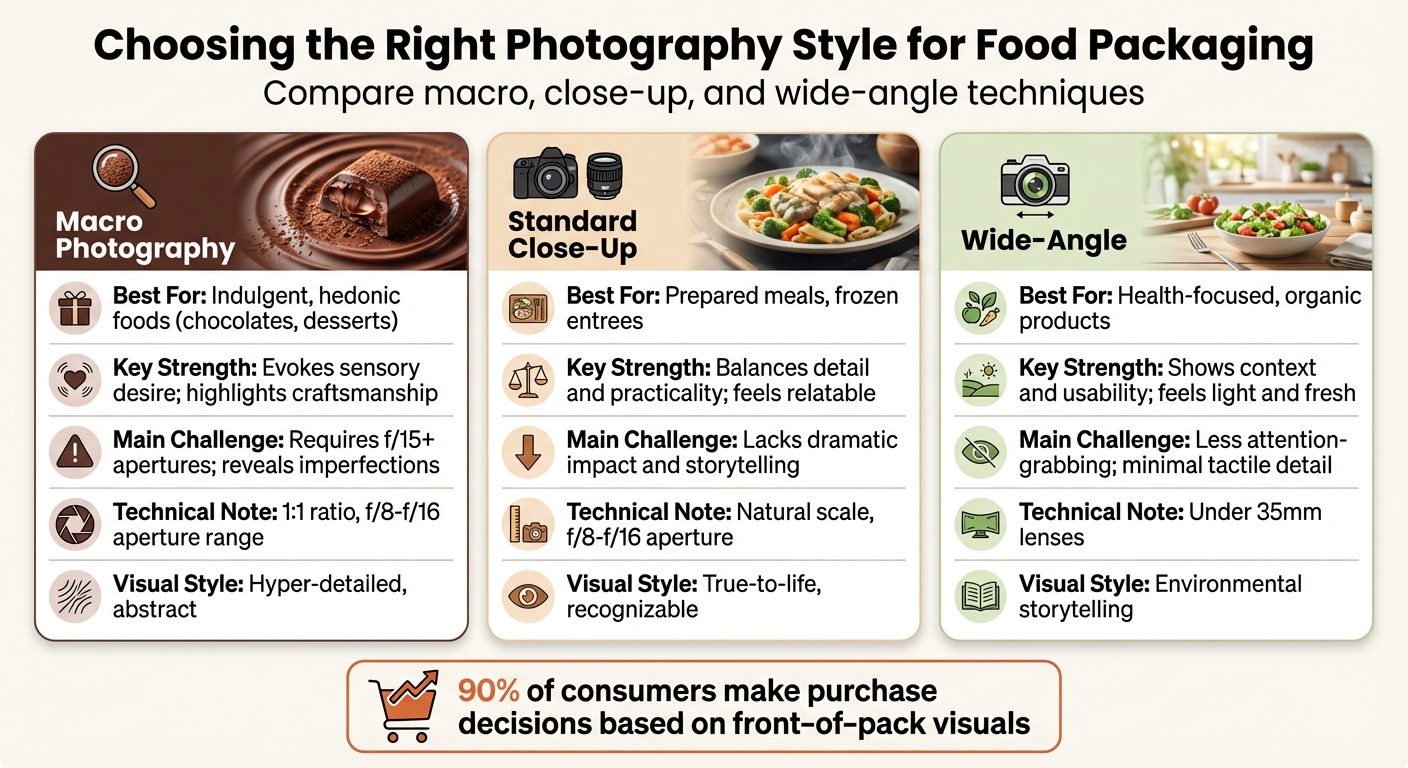
Food Photography Styles Comparison for Packaging Design
Choosing the right photography style - macro, close-up, or wide-angle - is crucial for showcasing your product's textures, freshness, and overall quality. Each approach has its strengths and challenges, and understanding these trade-offs can help you align your visuals with your product and brand strategy.
**Macro photography** offers stunning, hyper-detailed visuals that are perfect for indulgent products like chocolates or desserts. These close-ups highlight micro-textures, conveying a sense of luxury and craftsmanship. Photographer Daniela Spector notes:
> Macro photography delves into the abstract. It mystifies the viewer and creates curiosity.
However, this technique comes with challenges. Achieving sharpness across the image requires apertures of f/15 or higher and often involves focus stacking. Additionally, the extreme detail magnifies imperfections, demanding meticulous cleaning and post-production work.
**Standard close-up photography** strikes a balance between detail and practicality, making it a go-to option for prepared meals and frozen entrees. It’s less technically demanding than macro photography, with easier focus management. On the downside, it doesn’t have the dramatic impact of macro shots or the storytelling potential of wide-angle images.
**Wide-angle packaging shots** focus on brand context rather than fine details. They’re ideal for health-conscious or organic products, offering a clean, fresh aesthetic that emphasizes ease of use and completeness. This style is less technically intensive, but it may struggle to grab attention in busy retail spaces or digital feeds due to its reduced tactile appeal.
| Photography Technique | Best For | Key Strength | Main Challenge |
| --- | --- | --- | --- |
| **Macro** | Indulgent, hedonic foods | Evokes sensory desire; highlights craftsmanship | Requires f/15+ apertures; reveals imperfections |
| **Standard Close-Up** | Prepared meals, frozen entrees | Balances detail and practicality; feels relatable | Lacks dramatic impact and storytelling |
| **Wide-Angle** | Health-focused, organic products | Shows context and usability; feels light and fresh | Less attention-grabbing; minimal tactile detail |
Each style plays a unique role in shaping packaging effectiveness. With 90% of consumers basing their purchase decisions on the front-of-pack visuals, choosing the right photographic approach can directly influence sales. At [PKG Brand Design](https://pkgbranding.com), our Consumer First® approach combines these techniques with in-depth consumer insights to craft packaging that not only stands out but also tells your brand's story effectively.
## Conclusion
Macro photography has proven to be a powerful tool for enhancing food packaging design. By highlighting tiny details - like the shimmer of droplets or the intricate textures of ingredients - this technique creates an immediate sensory connection with consumers. This visual appeal plays a crucial role at the point of sale, where many purchase decisions are made.
For brands that emphasize natural ingredients, macro photography is especially effective. Lisa Smith, reflecting on [Burger King](https://www.bk.com/)'s rebranding, pointed out how macro shots can showcase the quality of ingredients directly. This approach not only conveys freshness and attention to detail but also elevates a product’s perceived value, making even budget-friendly items feel more premium and indulgent.
Unlike close-ups or wide-angle shots, macro photography offers unique advantages in marketing. Its high-resolution detail adapts effortlessly across various platforms, from social media to large-scale billboards. Dense patterns and subtle tonal shifts make these images perfect for full-bleed backgrounds, providing a striking canvas for text and logos.
At [PKG Brand Design](https://pkgbranding.com), we integrate macro photography into our packaging design using our Consumer First® approach. By combining stunning visuals with deep consumer insights, we create packaging that not only grabs attention but also communicates your brand’s story effectively. Our services go beyond photography, encompassing brand strategy, structural design, and production artwork to ensure every element contributes to your product’s success.
With 90% of consumers making purchase decisions just by looking at the front of the packaging, the right visuals can make all the difference. Macro photography could be the key to transforming your product from something that blends in to something that stands out.
## FAQs
### When should packaging use macro vs close-up vs wide-angle photos?
To bring out the fine textures and details of your product, **macro photography** is a fantastic choice. These ultra-close shots emphasize the sensory elements that make your product stand out. For showcasing individual ingredients or intricate textures, **close-up shots** are ideal. On the other hand, **wide-angle photos** are perfect for presenting the full product or its packaging in context. The style you choose should align with the story you're telling and how much detail you want to highlight to create a connection with your audience.
### How do you keep the whole macro shot sharp without looking fake?
To capture crisp and natural-looking macro shots, start by using a sturdy tripod to keep your camera steady. Pay close attention to your focus, making precise adjustments to ensure your subject is sharp. Additionally, choose an aperture that balances depth of field - too shallow, and you risk losing important details. These steps help maintain clarity while keeping the image looking true to life.
### How can macro photos stay appetizing while hiding imperfections?
When shooting macro photos of food, keeping the shot appetizing means zeroing in on textures and details that showcase freshness and quality. Thoughtful styling and well-planned lighting play a big role here. They can draw attention to the most appealing aspects of the dish while gently downplaying any imperfections, resulting in a final image that's both tempting and refined.
## Related Blog Posts
- [7 Ways Consumer Insights Improve Product Packaging](https://www.pkgbranding.com/blog/consumer-insights-improve-product-packaging)
- [Packaging Design Checklist for New Product Launches](https://www.pkgbranding.com/blog/packaging-design-checklist-new-product-launches)
- [5 Common Packaging Design Mistakes and How to Fix Them](https://www.pkgbranding.com/blog/common-packaging-design-mistakes-how-to-fix)
- [The Complete Guide to Structural Packaging Design](https://www.pkgbranding.com/blog/complete-guide-structural-packaging-design)
- [Facebook Share ](https://www.facebook.com/sharer/sharer.php?u=https%3A%2F%2Fwww.pkgbranding.com%2Fblog%2Fmacro-photography-food-packaging-design)
- [Twitter Share ](https://twitter.com/home?status=Macro+Photography+for+Food+Packaging+Design%20https%3A%2F%2Fwww.pkgbranding.com%2Fblog%2Fmacro-photography-food-packaging-design)
- [LinkedIn Share ](https://www.linkedin.com/shareArticle?mini=true&url=https%3A%2F%2Fwww.pkgbranding.com%2Fblog%2Fmacro-photography-food-packaging-design&title=Macro%20Photography%20for%20Food%20Packaging%20Design&summary=Macro%2C+close-up%2C+and+wide-angle+food+photography+create+tactile%2C+crave-worthy+packaging+visuals+that+highlight+texture%2C+freshness%2C+and+brand+story.&source=)
- [Email Share ](mailto:?subject=Macro%20Photography%20for%20Food%20Packaging%20Design&body=https%3A%2F%2Fwww.pkgbranding.com%2Fblog%2Fmacro-photography-food-packaging-design)
### Topics
- [Blog](https://www.pkgbranding.com/blog/topic/blog)
### Related Posts
[ How Multisensory Packaging Impacts Brand Loyalty Kevin Keating at PKG ](https://www.pkgbranding.com/blog/multisensory-packaging-impacts-brand-loyalty) [ 7 Emotional Triggers That Drive Packaging Success Kevin Keating at PKG ](https://www.pkgbranding.com/blog/emotional-triggers-packaging-success) [ How Social Media Listening Improves Packaging Design Kevin Keating at PKG ](https://www.pkgbranding.com/blog/social-media-listening-improves-packaging-design)
### Subscribe Now!
### Subscribe Now!
**Awarded Top 50**
**Package Design ****Blog**
[](http://blog.feedspot.com/packaging_design_blogs/)
- [How Multisensory Packaging Impacts Brand Loyalty](https://www.pkgbranding.com/blog/multisensory-packaging-impacts-brand-loyalty)
- [7 Emotional Triggers That Drive Packaging Success](https://www.pkgbranding.com/blog/emotional-triggers-packaging-success)
- [How Social Media Listening Improves Packaging Design](https://www.pkgbranding.com/blog/social-media-listening-improves-packaging-design)
- [11 Examples of Functional Packaging Features](https://www.pkgbranding.com/blog/functional-packaging-features-examples)
- [Competitor Analysis for Shelf Differentiation](https://www.pkgbranding.com/blog/competitor-analysis-for-shelf-differentiation)
- [Typography Checklist for Packaging](https://www.pkgbranding.com/blog/typography-checklist-packaging)
- [Top Biodegradable Packaging Myths Consumers Believe](https://www.pkgbranding.com/blog/biodegradable-packaging-myths-consumers-believe)
- [Macro Photography for Food Packaging Design](https://www.pkgbranding.com/blog/macro-photography-food-packaging-design)
- [Glass Packaging Benefits for CPG Brands](https://www.pkgbranding.com/blog/glass-packaging-benefits-cpg-brands)
- [Pet Food Packaging: FDA Rules to Know](https://www.pkgbranding.com/blog/pet-food-packaging-fda-rules)

Recognized as a
Top Package Design Agency
on [DesignRush](https://www.designrush.com/agency/package-design)
PKG BRAND DESIGN
2045 W Grand Ave, STE B-27332
Chicago, IL 60612-1576
[312.870.9101](tel:+1.312.870.9101)
 [Request a Free Consultation](https://www.pkgbranding.com/request-a-consultation)
[](https://www.hangar-12.com/)
© 2026 PKG Brand Design. All Rights Reserved

```json
{
"@context" : "http://schema.org",
"@type" : "BlogPosting",
"author" : {
"@type" : "Person",
"name" : "Kevin Keating at PKG"
},
"dateModified" : "April 2, 2026, 12:19:11 PM",
"datePublished" : "2026-02-23 20:38:39",
"description" : "Macro, close-up, and wide-angle food photography create tactile, crave-worthy packaging visuals that highlight texture, freshness, and brand story.",
"headline" : "Macro Photography for Food Packaging Design",
"image" : {
"@type" : "ImageObject",
"url" : "https://assets.seobotai.com/cdn-cgi/image/quality=75,w=1536,h=1024/pkgbranding.com/699cb2c4efc60cc2af095635-1771879242111.jpg"
},
"publisher" : {
"@type" : "Organization",
"logo" : {
"@type" : "ImageObject",
"url" : "https://cdn2.hubspot.net/hubfs/537000/PKG-1.png"
},
"name" : "PKG Brand Design"
}
}
```
```json
{
"@context" : "https://schema.org",
"@type" : "FAQPage",
"mainEntity" : [ {
"@type" : "Question",
"acceptedAnswer" : {
"@type" : "Answer",
"text" : "To bring out the fine textures and details of your product, macro photography is a fantastic choice. These ultra-close shots emphasize the sensory elements that make your product stand out. For showcasing individual ingredients or intricate textures, close-up shots are ideal. On the other hand, wide-angle photos are perfect for presenting the full product or its packaging in context. The style you choose should align with the story you're telling and how much detail you want to highlight to create a connection with your audience.
"
},
"name" : "When should packaging use macro vs close-up vs wide-angle photos?"
}, {
"@type" : "Question",
"acceptedAnswer" : {
"@type" : "Answer",
"text" : "To capture crisp and natural-looking macro shots, start by using a sturdy tripod to keep your camera steady. Pay close attention to your focus, making precise adjustments to ensure your subject is sharp. Additionally, choose an aperture that balances depth of field - too shallow, and you risk losing important details. These steps help maintain clarity while keeping the image looking true to life.
"
},
"name" : "How do you keep the whole macro shot sharp without looking fake?"
}, {
"@type" : "Question",
"acceptedAnswer" : {
"@type" : "Answer",
"text" : "When shooting macro photos of food, keeping the shot appetizing means zeroing in on textures and details that showcase freshness and quality. Thoughtful styling and well-planned lighting play a big role here. They can draw attention to the most appealing aspects of the dish while gently downplaying any imperfections, resulting in a final image that's both tempting and refined.
"
},
"name" : "How can macro photos stay appetizing while hiding imperfections?"
} ]
}
```