
Glass packaging is gaining traction among consumer packaged goods (CPG) brands for three main reasons: safety, premium appeal, and recyclability. Unlike plastic, glass is chemically inert, ensuring no harmful chemicals leach into products. Its infinitely recyclable nature aligns with growing consumer demand for eco-friendly options, with over 70% of buyers willing to pay more for sustainable packaging. Additionally, glass provides a high-end look that elevates a brand's presence on crowded shelves. For brands navigating strict regulations and shifting consumer preferences, glass packaging offers a reliable solution to meet these challenges while maintaining product quality and trust.
Key highlights:
- Safety: Glass is free from BPA, PFAS, and microplastics, making it a trusted material for food and beverages.
- Recyclability: Glass can be recycled endlessly without losing quality, saving energy and reducing waste.
- Premium Image: Its weight, clarity, and customizability convey luxury and quality, boosting consumer trust.
- Market Growth: The glass packaging industry is projected to grow from $71.50 billion (2024) to $105.25 billion by 2033.
Glass packaging is not just a container - it's a tool for protecting products, enhancing brand image, and meeting consumer and regulatory demands.
Common Packaging Problems for CPG Brands
Consumer Packaged Goods (CPG) brands today are navigating a tricky landscape shaped by shifting consumer priorities, stricter regulations, and fierce competition in retail spaces. Key challenges - like environmental concerns, maintaining a premium image, and ensuring product integrity - highlight the shortcomings of traditional packaging approaches.
Environmental and Regulatory Demands
Plastic packaging has long been criticized for its negative impact on the environment. A large portion of it ends up in landfills or contaminates waterways, posing serious risks to wildlife. Unlike glass, which can be recycled endlessly, most plastics are either downcycled into lower-quality materials or become completely unrecyclable over time.
Health concerns are another critical issue. Many traditional plastics and liners contain harmful substances like BPA, PFAS, or microplastics, which can leach into products and raise safety concerns. Modern consumers are paying closer attention to packaging labels, choosing brands that align with their environmental values. At the same time, governments are tightening regulations on packaging waste and recyclable materials, putting additional pressure on brands to adapt quickly.
Creating a Premium Brand Image
Packaging plays a major role in how consumers perceive a brand. Low-cost, lightweight materials often fail to convey a sense of quality, as many consumers associate heavier packaging with higher value. Glass, with its natural heft and elegance, exudes luxury and sophistication - qualities that are hard to replicate with other materials.
The challenge is even greater in crowded retail environments, where brands are constantly updating their designs to stand out. Balancing premium aesthetics with eco-friendly packaging options is no easy feat, especially as brands must also comply with evolving environmental regulations.
Protecting Product Quality and Consumer Safety
The choice of packaging material directly affects the product inside. For example, porous materials can allow oxygen to seep in, leading to spoilage through oxidation. Similarly, materials that can't handle high temperatures limit the use of critical processes like pasteurization or hot-filling, which are essential for ensuring product safety and extending shelf life.
Consumer trust is closely tied to packaging. In fact, 70% of consumers believe glass is the safest material for storing food and beverages, and 65% say they trust the quality of products packaged in glass more than those in other materials. This highlights the importance of choosing packaging that not only protects the product but also reassures consumers about its safety and quality.
sbb-itb-0c3a5ed
How Glass Packaging Solves CPG Brand Challenges
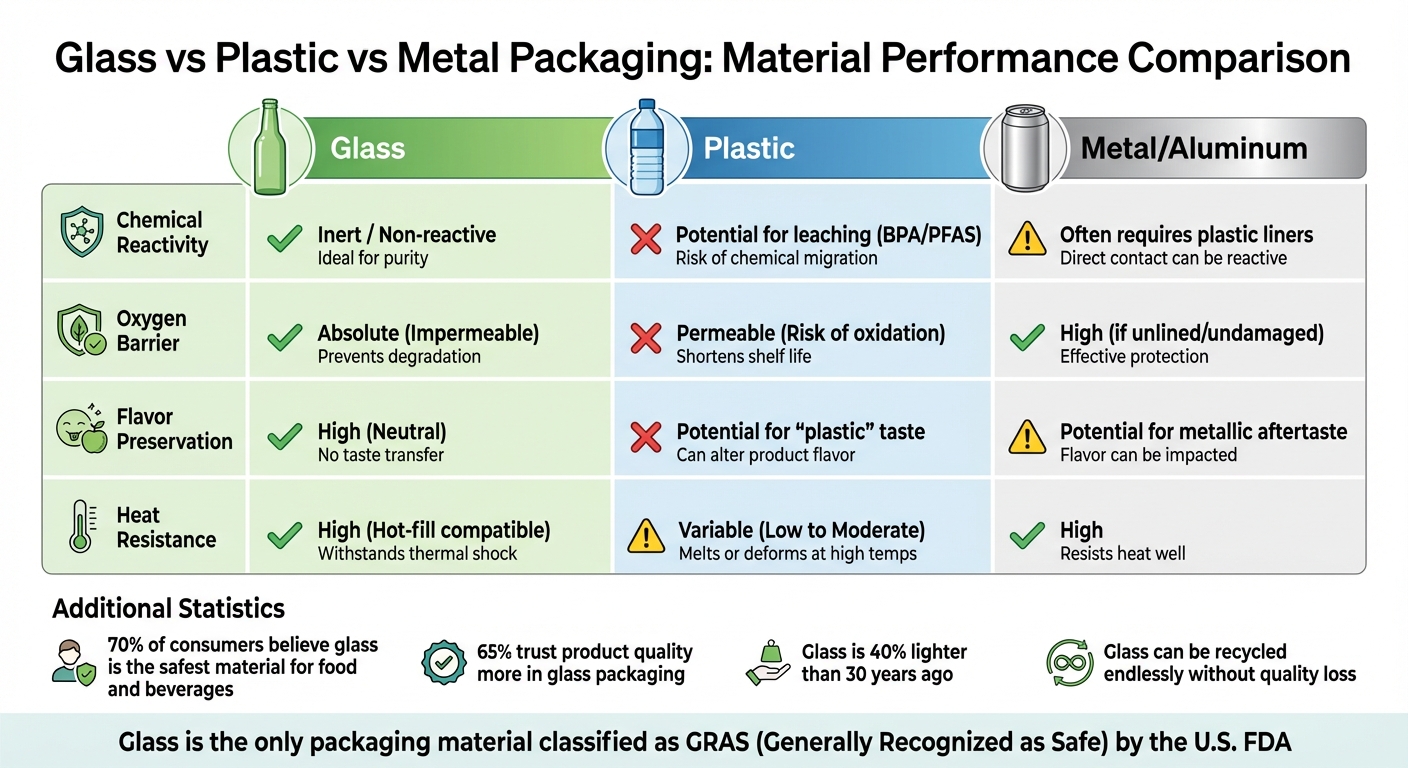
Glass vs Plastic vs Metal Packaging Comparison for CPG Brands
Glass packaging tackles three key challenges facing consumer packaged goods (CPG) brands today: environmental responsibility, premium branding, and product quality. Its unique properties give it an edge over plastic and metal alternatives.
Recyclability and Environmental Impact
Glass offers a standout feature: it can be recycled endlessly without losing its quality or purity. Through a closed-loop process, a recycled glass bottle can be turned into a new one in just 30 days, with no additional waste generated. Plus, recycling glass saves resources and energy - every ton of recycled glass saves over a ton of raw materials and cuts energy costs by 2–3% for every 10% of recycled content used. On top of that, for every six tons of recycled container glass processed, one ton of carbon dioxide emissions is avoided.
"As the only infinitely recyclable packaging material, glass packaging overcomes the challenges of 'single use' containers, appealing to eco-conscious consumers and driving demand for highly sustainable glass packaging among beverage brands." — Ronald Holmes, Vice President of Sales and Marketing and Sustainability, Arglass [15]
Glass's recyclability also helps brands meet stricter Extended Producer Responsibility (EPR) laws and state mandates for recyclable packaging. The numbers tell the story: while the U.S. average recycling rate for glass containers is 31.3%, states with container deposit programs achieve rates above 63%, compared to just 24% in non-deposit states. In April 2023, French glassmaker Verallia and Champagne house Telmont introduced a lighter bottle, reducing its weight from 835 grams to 800 grams. This project, which began with 3,000 bottles and expanded to 30,000 for the "Réserve de la Terre" cuvée by 2026, significantly lowered the product's carbon footprint.
Additionally, glass containers today are about 40% lighter than they were 30 years ago, improving transportation efficiency while maintaining a premium feel.
Visual Appeal and Brand Communication
Glass packaging creates an immediate visual impact. Its crystal-clear appearance highlights the natural colors and textures of the product inside, making it stand out on shelves. The versatility of glass allows brands to experiment with unique shapes, sizes, and textures. Customizations like embossing, distinctive finishes, and color tints (amber, green, cobalt) further help products grab attention in crowded retail environments.
"You can see the difference glass packaging makes from across a crowded shelf. Products packaged in glass give off a distinct vibe, saying to shoppers, 'Hi, I'm high-end. I just feel more substantial.' — Adam Miller [5]
The weight and tactile feel of glass also signal premium quality. For example, in 2024, Ardagh Glass Packaging–Europe collaborated with Hernö Gin to launch a 500 ml lightweight glass bottle. This new design was 100 grams lighter than the previous version and reduced carbon emissions by 31% per bottle - all while preserving its upscale appearance. Custom embossing not only enhances branding but also deters counterfeiting. Tinted glass, meanwhile, provides essential protection for light-sensitive products like olive oils and craft beers.
Product Preservation and Health Benefits
Glass doesn't just look good - it protects what's inside. Its inert and non-reactive nature ensures that flavors, aromas, and chemical compositions stay unchanged. Acting as a nonporous barrier, glass shields products from oxygen, moisture, pests, and contaminants, preventing oxidation and spoilage.
"Glass is the only widely used packaging material considered 'GRAS' or 'generally recognized as safe' by the U.S. Food and Drug Administration." — Glass Packaging Institute
Glass is free from harmful chemicals like BPA, PFAS, and phthalates, which are sometimes found in plastics or plastic-lined metal containers. Its broad pH resistance (3 to 11) ensures stability with acidic or basic ingredients. Plus, its heat resistance makes it ideal for sterilization and hot-fill processes, which are critical for products like sauces and juices.
| Feature | Glass | Plastic | Metal/Aluminum |
|---|---|---|---|
| Chemical Reactivity | Inert / Non-reactive | Potential for leaching (BPA/PFAS) | Often requires plastic liners |
| Oxygen Barrier | Absolute (Impermeable) | Permeable (Risk of oxidation) | High (if unlined/undamaged) |
| Flavor Preservation | High (Neutral) | Potential for "plastic" taste | Potential for metallic aftertaste |
| Heat Resistance | High (Hot-fill compatible) | Variable (Low to Moderate) | High |
"Your beverages and foods stay true to their flavor because glass doesn't react with what's inside. No weird aftertastes, just pure enjoyment." — Glass Packaging Institute
Glass is especially suited for products like kombucha, which release gases, as it can handle internal pressure without losing its integrity. For dry goods such as sugar or honey, glass prevents moisture ingress that can cause clumping or crystallization. These qualities not only preserve product quality but also ensure smooth supply chain operations.
Strength and Supply Chain Advantages
Glass packaging combines durability with supply chain efficiency. Over the past 30 years, its weight has been reduced by 40%, improving transport efficiency while maintaining strength. U.S. manufacturers like Arglass have formed partnerships to ensure a steady supply of recycled materials. For instance, in 2024, Arglass teamed up with The Upcycling Company to recover millions of glass containers across the Southeast, directing them to a recycling facility in Valdosta, GA.
Glass works across a wide range of product categories, from beverages and food to pharmaceuticals and personal care. Clear glass, in particular, is widely accepted and easily recyclable, making it a go-to choice for brands emphasizing simplicity and eco-friendliness. Additionally, brands can enhance their packaging with BPA-free and food-safe closures, liners, and adhesives. The rise of refillable glass programs for items like beer, cider, and dairy further highlights the role of glass in promoting a circular economy.
Working with PKG Brand Design on Glass Packaging
Glass packaging offers a blend of durability, visual appeal, and functionality. But to truly make an impact, a strong design strategy is key. That’s where PKG Brand Design steps in. Based in Chicago and founded in 2012, this agency transforms glass packaging into a branding powerhouse for consumer packaged goods (CPG) brands using its Consumer First® approach.
PKG Brand Design's Consumer First® Method
PKG Brand Design takes the inherent benefits of glass and amplifies them through its Consumer First® method. This research-driven process, inspired by Nielsen's BASES, focuses on how consumers interact with packaging. It zeroes in on three essential factors: Catching Attention, Connecting the Message, and Communicating Clearly. By testing packaging concepts directly with consumers, PKG refines every detail - from how the packaging feels in hand to the way its design elements guide the eye.
The statistics back this up: 61% of consumers say glass packaging "conveys better taste," and 60% of shoppers are more likely to purchase a product if they pick up the glass packaging in-store. PKG’s approach ensures that designs not only grab attention but also encourage tactile engagement, a key factor in driving sales.
"The final design had great success in the marketplace moving the needle on our brand's modernity and helping maintain its leadership in the category. But what sets PKG apart are the people. A true partnership... I always consider them an extension of our team." — Design/Packaging Director, Hillshire Brands
This consumer-focused method is integral to PKG’s full-service design offerings, which guide brands through every stage of packaging development.
Full-Service Glass Packaging Design
Glass packaging is known for its durability, recyclability, and premium feel. To fully leverage these qualities, PKG Brand Design offers a complete design service that covers everything from brand strategy to production-ready artwork. Their expertise in structural design ensures that glass containers not only look great but also meet durability standards. Services include:
- Brand positioning and competitive analysis
- Naming and logo testing
- Custom graphics and photography
- Copywriting
- Production-ready artwork
PKG works across diverse CPG categories, including food and beverage, personal care, and pet products. Their tiered pricing structure accommodates various budgets, starting with a $5,000 Starter plan for single-product designs and scaling up to a $20,000 Premium plan, which includes multiple concepts, consumer testing, and in-depth market research. This flexibility helps brands choose a package that aligns with their market goals.
"At PKG, we help brands tell their story through packaging that generates conversations and creates awareness, trial and loyalty." — PKG Brand Design [18]
For brands exploring glass packaging, PKG emphasizes the importance of testing designs with physical samples before full production. This step ensures that regulatory, functional, and aesthetic considerations are addressed early. Their production-ready artwork service smooths the transition to manufacturing, avoiding technical hiccups that could delay a product launch.
Conclusion
Glass packaging effectively addresses the needs of CPG brands by combining environmental responsibility, premium appeal, and product integrity. Its closed-loop recyclability aligns perfectly with modern consumer values. In fact, over 80% of consumers view glass as the safest and most environmentally friendly packaging option, while more than 70% are willing to pay extra for sustainable packaging.
Beyond sustainability, glass excels at preserving product quality. Its impermeable nature prevents chemical leaching and safeguards taste and aroma, ensuring that products maintain their intended flavor and freshness. This reliability strengthens trust among consumers who value packaging that protects product integrity.
These attributes ultimately translate to greater brand trust and loyalty.
"Glass remains our top choice – not because it's old, but because it's evolved. It portrays luxury, it's responsible and ready for the next generation." — Paul Morgan, Managing Director, Glassworks International [19]
PKG Brand Design leverages these strengths through its Consumer First® approach. By directly testing packaging concepts with consumers and focusing on grabbing attention, delivering clear messages, and fostering connections, they ensure glass packaging not only looks premium but also drives sales. Their end-to-end design services - from brand strategy to production-ready artwork - help brands tell engaging stories that resonate with modern consumers.
For brands facing tighter regulations and rising consumer expectations, glass packaging, paired with strategic design, offers a lasting edge in the marketplace.
FAQs
Is glass packaging too heavy or costly for shipping?
Glass packaging, while offering advantages like durability and recyclability, comes with a trade-off: it’s heavier and more costly to ship compared to alternatives like plastic. The added weight increases fuel consumption, driving up transportation expenses. For brands, this means factoring in these logistical costs when deciding if glass is the right choice for their packaging needs.
Which products benefit most from glass packaging?
Glass packaging works well for food, drinks, and beauty items. It creates a safe, non-reactive barrier that helps keep products fresh longer and maintain their quality. Plus, its sturdy build and sleek look make it a favorite for brands wanting to boost their product's visual appeal, especially among health-conscious buyers.
How can brands boost glass recycling rates in the U.S.?
Improving glass recycling rates in the U.S. starts with tackling two major challenges: contamination and breakage. One way to address these issues is through better public education and upgraded recycling infrastructure. For instance, teaching people how to properly separate glass from other recyclables can make a huge difference.
Another effective approach is implementing deposit return systems. States with bottle bills - laws requiring a refundable deposit on beverage containers - consistently show much higher recycling rates. These systems not only encourage people to return their glass containers but also help reduce contamination.
Lastly, public awareness campaigns and offering consumer incentives can boost participation in recycling programs. When people understand the impact of their actions and feel motivated to recycle, the results can be transformative.